Semrush and Ahrefs both solve real problems, and picking between them usually comes down to what your week actually looks like, not which tool has the longer feature list. If you manage paid search, content, and client reporting alongside SEO, one of these platforms fits that reality far better than the other. If your days are backlinks, outreach, and organic rankings, the other one earns its keep faster.
In this guide, I cover how we tested both platforms, what the data actually shows across keyword research, site audits, rank tracking, backlinks, and AI visibility, how pricing breaks down at every tier, and which tool fits which kind of team. I also get into onboarding time, seat management for teams, and what happens when you pick the wrong one for your workflow details most comparisons skip entirely.
How We Evaluated Semrush and Ahrefs
We ran this comparison the way we run actual client work: inside both platforms, on live sites, across multiple SEO disciplines. Keyword research for new content briefs, technical audits ahead of a migration, backlink prospecting for outreach campaigns, and competitor gap analysis before a quarterly strategy review all happened in both tools during this process.
We weighted each category by how often it shows up in daily SEO work, not by how many bullet points a feature page lists. A tool that handles rank tracking brilliantly but buries it behind an add-on fee scores differently than one that includes it standard. That distinction matters more once you’re three months into a retainer and the invoices start adding up.
We also cross-checked every pricing figure and keyword database number against each platform’s current public pricing page, rather than relying on older cached comparisons. SEO tool pricing shifts often enough that a six-month-old number can quietly mislead a buying decision.
At a Glance: Semrush vs. Ahrefs
| Feature | Semrush | Ahrefs | Winner |
| Free Version | Yes (10 searches/day, 100 pages/month) | Ahrefs Webmaster Tools (limited) | Tie different strengths |
| Keyword Database | 28.4 billion+ keywords | 28.7 billion+ keywords | Ahrefs (slightly larger) |
| Backlink Database | 43+ trillion backlinks | 35+ trillion live backlinks | Semrush (larger raw index) |
| Site Audit | 140+ checks, AI health score | Always-on crawl, clean interface | Tie different approaches |
| Rank Tracking | Daily updates included | Daily updates cost extra | Semrush |
| Competitor Analysis | SEO + PPC + content | SEO-only, very deep | Semrush (broader scope) |
| PPC Tools | Yes | No | Semrush |
| Content Tools | AI writer, brief builder, optimizer | Content Explorer (discovery only) | Semrush |
| White-Label Reporting | Included | Paid add-on | Semrush |
| AI Visibility Tracking | ChatGPT, Perplexity, AI Overviews | Brand Radar (basic) | Semrush |
| Local SEO | Full toolkit | Not available | Semrush |
| Learning Curve | Steeper, more surface area | Faster, more focused | Ahrefs |
| Algorithm Monitoring | Real-time volatility sensor | Update overlay on history graph | Semrush |
| Best For | All-in-one, PPC, agencies | Link building, backlinks, content research | Depends on workflow |
| Free Trial | 7 days | Paid only | Semrush |
Key Takeaways from This Comparison
Pick Semrush if you run SEO alongside PPC, need white-label reporting with automated delivery, want AI visibility tracking built in, produce content at scale, or run an agency where clients expect a full marketing report rather than an SEO-only snapshot.
Pick Ahrefs if backlink data is central to your daily work and you need the freshest possible link discovery, if link building is your core service and Domain Rating matters to how you qualify prospects, if you want a faster and simpler interface, or if you stay purely organic and never touch paid channels.
What is Semrush?
Semrush launched in 2008 as a keyword research tool and has since expanded into one of the broadest digital marketing platforms available. SEO, PPC, content marketing, social media management, competitor intelligence, and AI visibility tracking now all live inside one dashboard, which removes the need to stitch together five separate subscriptions for a single campaign.
The platform’s real strength is breadth. A team can pull keyword data, backlink insight, technical site health, and competitive intelligence from one login instead of jumping between tools mid-project. That breadth does come with a learning curve new users typically need a few sessions to find their footing across the interface, but the data depth underneath justifies the ramp-up time for most teams running ongoing campaigns.
Who It’s Built For
Semrush fits digital marketing agencies managing multiple clients who need one platform instead of several, in-house SEO teams that also run paid search or content work, e-commerce brands tracking large keyword sets alongside competitor activity, and enterprises that need white-label reporting, advanced permissions, and API access.
Core Strengths at a Glance
The Keyword Magic Tool spans more than 28.4 billion keywords across 142 geographic databases. Site audits come with 140+ technical checks and actionable recommendations. PPC and competitor ad research are included standard, something Ahrefs simply doesn’t offer. Backlink gap analysis surfaces link opportunities competitors already hold. Position tracking updates daily with SERP feature monitoring built in, and the content marketing toolkit covers topic research through a writing assistant. AI visibility tracking rounds it out, monitoring brand presence across ChatGPT, Perplexity, and Google AI Overviews.
What is Ahrefs?
Ahrefs launched in Singapore in 2010 and built its reputation on backlink data specifically. Keyword research, site auditing, rank tracking, and content analysis arrived later, but backlink analysis has remained the platform’s defining strength throughout. Its web crawler is the second most active on the internet after Google’s own, which is the main reason its backlink index is considered one of the most current in the industry.
Where Semrush spreads across PPC, social, and content in addition to SEO, Ahrefs stays close to organic search and link building specifically. The interface reflects that focus fewer menus, a cleaner data layout, and a shorter path from question to answer when the question is purely about search performance.
Who It’s Built For
Ahrefs fits link builders and SEO specialists who need deep, current backlink data daily, content marketers using Content Explorer to find proven topics, in-house SEO teams focused purely on organic growth without a PPC need, and agencies whose core deliverable is competitor and keyword research rather than full-channel marketing reporting.
Core Strengths at a Glance
Site Explorer covers more than 35 trillion live backlinks and 28.7 billion keywords across 217 locations. Keywords Explorer pulls data from Google, YouTube, Amazon, and Bing in addition to standard search. Content Explorer surfaces top-performing content by topic, useful for both link prospecting and content ideation. Site Audit delivers a clear health score with prioritized technical fixes, and Rank Tracker handles keyword- and page-level position monitoring. Domain Rating and URL Rating remain two of the most widely cited authority metrics in the SEO industry, and Brand Radar extends tracking to how a brand shows up across AI platforms.

Semrush vs. Ahrefs: Head-to-Head Comparison
Feature lists only go so far. What actually separates these platforms shows up once you’re mid-campaign, cross-referencing data, or explaining a result to a client. Here’s how each one performs across the categories that come up most often in real SEO work.
1. Keyword Research
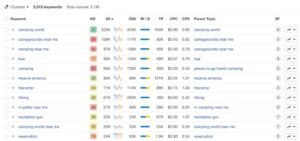
Both databases are large, but they’re built around different priorities. Semrush covers 28.4 billion keywords across 142 geo databases, with roughly 3.7 billion of those specific to the US. Ahrefs runs a slightly larger global set at 28.7 billion keywords across 217+ locations, though its US-specific coverage sits closer to 2.5 billion.
Ahrefs edges ahead on international reach. Semrush goes deeper for US-focused work. The real distinction, though, is in how each platform presents what it finds.
Semrush Keyword Magic Tool
This tool groups thousands of keyword variations into topic clusters automatically, which speeds up content planning considerably. Beyond the raw list, it layers in search intent classification, SERP feature data, competitive density scoring, trend history, and a Personal Keyword Difficulty score that adjusts based on your own domain’s established authority rather than a flat industry average. The result reads less like a keyword list and more like a prioritized action plan.

Ahrefs Keywords Explorer
Ahrefs takes a narrower, sharper approach here. Its standout is clicks data showing how many searchers actually click through to a result, rather than just reporting search volume. That distinction matters more every year, since a keyword showing 5,000 monthly searches can deliver a fraction of that in real clicks once AI Overviews or featured snippets absorb most of the attention. Ahrefs pairs this with a Traffic Potential score, estimating total achievable traffic if a page ranks for the target keyword and its related variations together.
Semrush gives you more raw material for building content plans at volume. Ahrefs gives you sharper accuracy on whether one specific keyword is worth the effort at all.
2. Site Audit
Both platforms flag technical issues reliably, though the presentation differs enough to matter for different workflows.
Semrush Site Audit
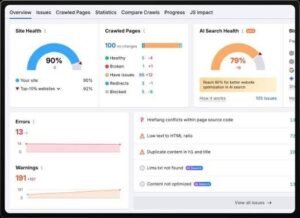
This audit checks over 140 issues, grouped into thematic reports spanning crawlability, HTTPS configuration, Core Web Vitals, and internal linking structure. Beyond flagging problems, it explains what to fix and why each issue matters for rankings. An AI Search Health score now sits inside the audit as well, checking whether AI crawlers can properly access and interpret page content. For sites carrying significant technical debt, this categorized structure makes working through fixes more methodical.
Ahrefs Site Audit
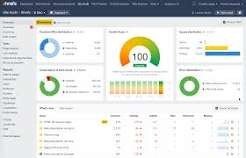
Ahrefs presents audit data more visually, with the health score front and center and issues ranked by priority in a layout that’s easy to walk a client through without a lengthy explanation first. Its genuine edge is an always-on crawl that monitors sites continuously rather than waiting for a scheduled pass, which means technical issues surface closer to the moment they actually occur.
For detailed, systematic in-house audits, Semrush’s categorized depth wins. For client-facing walkthroughs or ongoing monitoring between scheduled reviews, Ahrefs’ cleaner presentation does the job with less friction.
3. Rank Tracking
Both tools track rankings dependably, but the depth of what ships standard differs noticeably.
Semrush Position Tracking
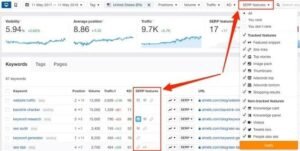
Semrush delivers daily ranking updates across keywords, devices, and locations as part of the base plan. It tracks SERP features including featured snippets, local packs, and AI Overviews, and lets you monitor competitor positions inside the same dashboard. Automated alerts and scheduled PDF delivery come included at no extra cost a meaningful advantage once you’re managing rank tracking across several client accounts simultaneously.
Ahrefs Rank Tracker
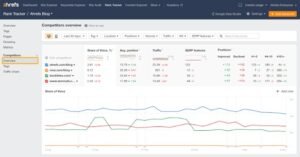
Ahrefs’ tracker is accurate and clean in execution, covering keyword- and page-level position monitoring, historical trend data, and competitor comparisons. The catch is cost: daily update frequency requires a paid Project Boost add-on rather than shipping standard. If daily visibility is part of how you work, that extra line item compounds quickly across multiple active projects.
4. Competitor Analysis
Both platforms give you a real view into competitor activity, approached from different angles.
Semrush Competitor Analysis
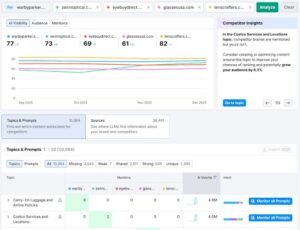
Semrush covers more ground here than most comparable tools. Traffic analytics, keyword gap analysis, backlink gap reporting, and advertising research all sit inside the same dashboard, giving a complete picture of how a competitor operates across both organic and paid channels at once. Traffic Analytics estimates competitor traffic reliably for established domains, while Market Explorer provides a wider view of market share and audience behavior across an entire niche. The Keyword Gap tool specifically surfaces terms competitors rank for that you don’t yet, which tends to be one of the fastest routes to proven-demand content opportunities.
Ahrefs Competitor Analysis
Ahrefs runs competitor analysis through Site Explorer directly. Pulling a competitor’s top pages by traffic, their full ranking keyword set, backlink sources, and content gaps happens quickly and the interface stays uncluttered while doing it. Where it falls short is paid search ad intelligence exists for researching competitor creative, but there’s no workflow for building or exporting actual ad campaigns from that data.
For organic-only competitor research, both hold up equally well. Once paid search enters the picture, Semrush pulls ahead on completeness.
5. Content Tools
This category shows the clearest philosophical split between the two platforms.
Semrush Content Marketing Toolkit
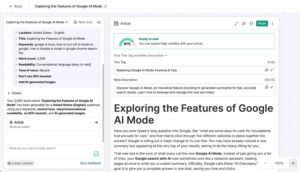
Semrush’s content suite covers the entire production pipeline in one place. Topic Finder handles ideation, the SEO Brief Generator builds competitor-informed briefs automatically, and the AI Article Generator produces full drafts ready for refinement. From there, content can be optimized for both traditional SEO and AI search, repurposed into social and email formats, and published without leaving the platform. For teams producing content at volume across several accounts, the time saved between initial research and a usable brief adds up fast.

Ahrefs Content Explorer
Ahrefs approaches content differently Content Explorer functions more like a search engine for existing content, surfacing top-performing articles on any topic sorted by traffic, backlinks, or social shares. It excels at ideation, link prospecting, and uncovering broken-link opportunities, but it isn’t a writing assistant or brief builder. It’s purely a research and discovery layer.
If you need a complete content workflow in one platform, Semrush fits better. If your main need is discovering what’s already performing in a niche to inform link building or topic selection, Ahrefs’ Content Explorer handles that cleanly.
6. Backlink Analysis and Link Building
Both platforms offer backlink analysis, but the quality gap here is the most pronounced in this entire comparison, and your workflow should weigh heavier than any other factor when deciding based on this category alone.
Semrush’s Backlink Analytics and Link Building Tool
Semrush’s index holds 390 million referring domains and 43 trillion backlinks. It provides a thorough breakdown of any domain’s link profile, surfaces potentially toxic links for disavowal review, and integrates directly with Google Search Console for a cleaner cleanup process. Where Semrush pulls ahead on workflow specifically is its Link Building Tool, which operates closer to a CRM finding prospects, managing outreach sequences, tracking request status, and monitoring new or lost backlinks without leaving the platform. The Backlink Gap tool bridges both halves of this category well, identifying domains linking to multiple competitors but not to you, which surfaces quality prospects before outreach even starts. Semrush uses Authority Score as its link-quality metric a reasonable proxy for domain strength, though less widely referenced industry-wide than Ahrefs’ equivalent.

Ahrefs’ Site Explorer and Link Prospecting
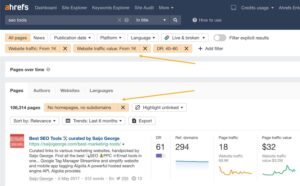
Ahrefs’ index holds 500 million referring domains and 35 trillion backlinks. For link building specifically, unique referring domains matter more than raw backlink volume, and that’s where Ahrefs holds a real edge. Its crawler being the second most active on the web after Google means new backlinks surface faster here than almost anywhere else valuable the moment you need to confirm a new link has gone live. Site Explorer remains the standard for competitive backlink research: pulling a competitor’s full profile, filtering by link quality, sorting by Domain Rating, and exporting a clean prospect list takes minutes. Domain Rating itself has become the default benchmark most link builders reference when qualifying prospects and evaluating outreach targets.
A workflow that uses Ahrefs for prospecting and competitive research, then manages outreach separately or inside Semrush’s CRM-style tool, captures the strength of both. Teams wanting outreach visibility and campaign tracking in the same place where research happens tend to prefer keeping it inside Semrush end to end.
7. Search Intent Classification
Search intent now sits at the core of keyword research for both platforms, though they handle the classification differently.
Semrush
Semrush tags every keyword in the Keyword Magic Tool automatically as Informational, Navigational, Commercial, or Transactional, letting you filter an entire keyword list by funnel stage without manual sorting. That automatic tagging saves considerable time on larger keyword sets, letting you prioritize conversion-likely terms over awareness-stage terms immediately.
Ahrefs
Ahrefs approaches intent through its Parent Topic feature instead, which clarifies what a keyword genuinely belongs to and shapes how content gets structured around it. Combined with the Traffic Potential metric and actual click data, the picture of how users behave after searching becomes considerably clearer than volume alone would suggest.
8. Google Algorithm Monitoring
When a core algorithm update rolls out, knowing quickly whether rankings moved and why matters more than almost anything else in SEO that week.
Semrush Sensor
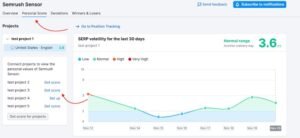
Semrush Sensor tracks algorithm volatility across industries and device types daily. When rankings shift following an update, cross-referencing that volatility data against your own rank tracking makes spotting the pattern fast. Position Tracking also flags unusual ranking changes independently, helping connect a specific update to movement in your own keyword set.
Ahrefs
Ahrefs doesn’t run a dedicated volatility-tracking tool the way Semrush does. It does include a Google Broad Core Update monitor inside its rank tracker, flagging active updates and overlaying them onto your ranking history graph. That’s a useful reference point for connecting shifts to a known update window, but it functions more as a historical marker than a live monitoring system there’s no real-time volatility score or industry-level view available.
9. Local SEO
For any team working with clients that have physical locations, local SEO tooling can be a deciding factor on its own.
Semrush Local
Semrush runs a dedicated Local SEO toolkit covering most of what an agency needs day to day. Listing Management distributes business information across major directories from a single place, cutting out a lot of manual directory work. A Map Rank Tracker monitors Google Maps rankings by specific location, and review management tracks and helps respond to customer reviews directly inside the platform.
Ahrefs
Ahrefs has no dedicated local SEO toolkit. Local keyword research and competitor analysis still work fine inside the platform, but listing management, map rank tracking, and review monitoring simply aren’t part of what it offers. Teams running local SEO as a core service would need to pair Ahrefs with a separate tool to close that gap.
10. Reporting and Data Export
For agencies specifically, reporting isn’t a side feature it’s frequently the main thing a client actually sees each month.
Semrush
Semrush’s reporting setup is the more mature of the two. Custom PDF reports build from pre-made templates, schedule for automatic delivery, and carry full white-label branding. Direct integration with Google Analytics and Google Search Console consolidates everything into a single report rather than several. For agencies managing numerous client accounts, this setup saves real time every single month.
Ahrefs
Ahrefs added a Report Builder that creates custom reports from 15+ SEO metrics, exportable as PDFs. It’s a genuine step forward for the platform, though it remains a paid add-on and doesn’t match Semrush’s scheduling depth or white-label options. On API access specifically, Ahrefs includes it starting at the Standard plan, while Semrush requires a higher-tier business plan for the same access meaning teams needing to feed data into custom dashboards get there at a lower price point through Ahrefs.
11. AI Search Visibility and Answer Engine Tracking
This is quickly becoming one of the most consequential categories in any SEO tool comparison, and it deserves its own full evaluation rather than a footnote inside a pricing table.
Semrush’s AI visibility tracking, bundled under Semrush One, monitors how a brand appears across ChatGPT, Perplexity, and Google AI Overviews directly alongside traditional rank tracking. That means a single dashboard shows both where a page ranks in classic search results and whether an AI answer engine is citing or summarizing that same content a comparison that used to require a separate tool entirely.
Ahrefs covers similar ground through Brand Radar, though the depth is noticeably lighter. Brand Radar flags mentions and sentiment across major AI platforms, but it doesn’t integrate as tightly with keyword-level tracking or offer the same prompt-level visibility that Semrush’s approach does.
Neither platform treats AI visibility as a true standalone discipline the way a dedicated tool would both fold it into an existing workflow rather than building it from the ground up. For teams where AI visibility is becoming a genuine KPI rather than a curiosity, that’s worth factoring in directly: Semrush currently goes deeper here, but neither tool matches a purpose-built AI tracking platform on depth alone.
Semrush vs. Ahrefs: Pricing
Pricing is often the deciding factor, particularly for smaller teams and solo SEO professionals. Here’s what each platform actually costs, and whether the number matches what you get for it.
Semrush Pricing
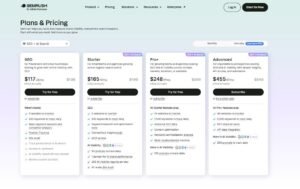
Semrush runs three core plans, billed monthly at the rates below. Annual billing brings a 17% discount across every tier.
Starter: $165.17/month
The entry-level Semrush One plan includes keyword research, an AI-ready site audit, backlink analysis, and position tracking across both Google and AI platforms like ChatGPT and Perplexity. Limits are fairly tight at this tier 5 websites, 500 tracked keywords, and 50 daily prompts and there’s no historical data or content optimization included. Still, it’s a workable entry point for a solo operator who wants visibility across both traditional and AI search without committing to a higher tier immediately.
Pro+: $248.17/month
Pro+ covers both traditional SEO and AI search visibility in a single package, extending to 15 websites, 1,500 tracked keywords, and 100 daily prompts across Google and AI platforms. It also unlocks content optimization tools, keyword cannibalization analysis, multi-location tracking, historical data, and AI brand insights a meaningful step up for anyone needing content tooling alongside core SEO data.
Advanced: $455.67/month
This tier includes everything from Starter and Pro+, adding Share of Voice tracking, 40 websites, 5,000 tracked keywords, 200 daily prompts, API data integration, and migration support from third-party platforms. For agencies running large-scale SEO and AI visibility campaigns across many clients, needing data connected to external systems, this is the tier built specifically for that scale.
Ahrefs Pricing
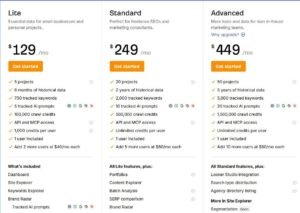
Every Ahrefs tier ships the same core toolset. What actually changes as you move up is the volume of data, number of projects, and user allowances.
Lite: $108/month
This tier includes 5 projects, 750 tracked keywords, 6 months of historical data, and 100,000 crawl credits. At 500 credits per user, those credits run out faster than expected on an active campaign. Access covers Site Explorer, Keywords Explorer, Site Audit, Rank Tracker, Competitive Analysis, Brand Radar, and Web Analytics. It suits freelancers and solo operators doing lighter, less frequent research rather than daily heavy use.
Standard: $208/month
Standard steps up to 20 projects, 2,000 tracked keywords, 2 years of historical data, and 500,000 crawl credits with no per-user limit. On top of everything in Lite, it unlocks Content Explorer, Portfolios, Batch Analysis, SERP comparison, keyword clustering, AI keyword suggestions, search intent data, broken backlink reports, site structure analysis, and deeper Brand Radar and Search Console reporting. This tier fits small to mid-size agencies and in-house teams running consistent backlink research and link building as a core part of the job.
Advanced: $374/month
The top tier includes 50 projects, 5,000 tracked keywords, 5 years of historical data, and 1,500,000 crawl credits with no per-user limit. Beyond Standard, it adds Looker Studio integration, search type distribution, an agency directory listing, HTTP authentication for site audits, and deeper Site Explorer segmentation built for larger agencies and established in-house teams needing higher capacity and client-ready reporting through Looker Studio.
Which Offers Better Value?
At entry level, Ahrefs Lite at $108/month and Semrush Starter at $165.17/month sit fairly close, but Semrush delivers more at that price point: SEO tooling alongside AI visibility tracking, with no per-user credit ceiling. Ahrefs Lite’s 500-credit-per-user cap tends to run out faster than teams expect once a campaign is actually active.
At the mid tier, the two land at nearly identical pricing. Semrush wins on breadth with content tools, AI tracking, and multi-location monitoring bundled in. Ahrefs wins on backlink depth and a cleaner research interface. The decision at this tier comes down to whether coverage or pure SEO depth matters more for your workflow.
At the top tier, Semrush Advanced includes API access standard, while Ahrefs requires its Enterprise plan at $1,499/month for the same capability. For teams needing data integration without jumping to enterprise pricing, Semrush is the more cost-effective route.
Before subscribing to either, three questions tend to clarify the decision fast: does your team touch paid search or social reporting at all, does backlink freshness matter enough to justify a premium, and will more than one person need simultaneous access without hitting a credit wall.
Data Accuracy: How Keyword Volume Estimates Actually Compare
Two tools reporting similar-sounding keyword volumes doesn’t mean they’re measuring the same thing underneath. Semrush builds its volume estimates from a blend of clickstream data and modeled projections, smoothing out seasonal spikes and regional variance across its 142 geo databases. Ahrefs leans more heavily on clickstream data sourced from its own partnerships, which is part of why its click-through metrics read as more granular for individual keywords.
Neither approach is inherently more “correct” they’re measuring volume through different lenses, which is exactly why the same keyword can show a different number in each tool. For content planning at scale, Semrush’s modeled smoothing tends to produce more stable month-to-month figures. For judging whether one specific keyword is worth chasing right now, Ahrefs’ click-based data reflects current reality more precisely, since it accounts for how much traffic a ranking position actually delivers once SERP features are factored in.
The practical takeaway: don’t treat either number as gospel on its own. Cross-referencing both platforms’ estimates before committing real budget to a keyword target produces a more reliable picture than trusting a single tool’s figure in isolation.
Learning Curve and Onboarding Time
Semrush’s breadth comes with a genuine tradeoff in onboarding time. New users typically need several sessions just to locate the right tool for a given task, since SEO, PPC, content, and social features all share the same navigation structure. The documentation is thorough, and the in-platform guidance has improved significantly over the past couple of years, but a team migrating from a simpler tool should budget real ramp-up time before expecting full productivity.
Ahrefs, by contrast, gets new users productive faster. The narrower feature set means less to learn before running a first real report, and the interface groups related functions together more intuitively. Teams whose work stays within SEO specifically tend to feel comfortable inside Ahrefs within a single working session, where the same comfort level inside Semrush usually takes longer to reach.
For a solo operator or a small team without dedicated SEO software experience, that shorter runway matters. For a larger team that’s going to use the platform’s full breadth eventually anyway, Semrush’s steeper initial curve pays off once the team is fully ramped.
Team Collaboration and User Seat Management
Multi-user workflows reveal a real difference once a team grows past one or two people. Semrush’s plans define a set number of users per tier, with additional seats available as an add-on cost that scales depending on the plan. Role-based permissions let an agency control what junior team members can access versus what’s reserved for account leads, which matters once client data needs tiered visibility.
Ahrefs ties user access more directly to crawl credits rather than a flat seat count on its entry tier the Lite plan’s 500-credit-per-user allocation means adding team members shrinks everyone’s available crawl budget unless the account moves up a tier. Standard and Advanced remove that per-user credit ceiling, which makes those tiers considerably more practical once more than one or two people need regular access.
For a growing team, this distinction shapes total cost more than the headline price suggests. A five-person team on Ahrefs Lite will hit credit limits fast, while the same team on Semrush’s entry tier faces user-based pricing instead worth modeling out before committing to either platform’s lowest tier if the team is expected to grow.
Semrush Pros and Cons
Pros
Semrush functions as a genuine all-in-one platform, covering SEO, PPC, content marketing, social media, and AI visibility tracking without needing separate subscriptions for each channel. The Keyword Magic Tool remains one of the strongest keyword research experiences available, surfacing thousands of variations with intent, difficulty, and trend data in a single view. Reporting for agencies stands out too scheduled PDF delivery, white-label branding, and Looker Studio integration make client reporting noticeably faster and more professional. AI search visibility tracking rounds out the list, monitoring brand presence across ChatGPT, Perplexity, and Google AI Overviews as that category becomes more important industry-wide.
Cons
Backlink data lags behind Ahrefs in freshness while Semrush’s index is large, Ahrefs consistently surfaces new referring domains faster and with tighter accuracy for active link building work. Add-on costs also stack up quickly: extra user seats, the AI Visibility Toolkit, and local SEO features all carry additional charges, meaning the real monthly spend often runs well past the advertised base price.
Ahrefs Pros and Cons
Pros
Ahrefs’ backlink database is genuinely industry-leading, with over 500 million referring domains indexed and link opportunities surfacing faster and more accurately than most competing platforms manage. The interface stays clean and focused, easier to navigate day to day than Semrush’s broader surface area. Clicks data inside Keywords Explorer shows real click-through estimates rather than just search volume, giving a more honest read on actual traffic potential. The always-on site crawl catches technical issues continuously rather than waiting for a scheduled audit window, and Domain Rating remains the most widely referenced authority metric across the SEO industry the default most link builders reach for when qualifying prospects.
Cons
Daily rank tracking costs extra through the Project Boost add-on, an unexpected charge on top of what already reads as a premium subscription. There’s also no PPC or content marketing tooling at all teams running paid search or structured content workflows will need a separate tool regardless of which Ahrefs tier they’re on.
Who Should Use Semrush?
Digital marketing agencies managing SEO, PPC, and content for multiple clients get the most value from Semrush’s all-in-one structure, especially when juggling several channels for the same account. In-house marketing teams reporting across organic, paid, and social in one place save real time compared to switching between separate tools for each channel. Businesses needing regular client reporting benefit from the white-label, scheduled delivery options that keep clients updated without manual effort every month. SEO professionals tracking AI visibility get a dashboard that shows both classic rankings and AI answer engine presence together, something Ahrefs doesn’t yet match in depth. Enterprises with heavier data needs benefit from API access, Share of Voice tracking, and the deeper integration options built for large-scale operations.
Who Should Use Ahrefs?
Link builders and SEO specialists living inside backlink data daily will find Ahrefs more comfortable to work in, backed by one of the most comprehensive link indexes available anywhere. Content marketers using Content Explorer to find proven topics, estimate traffic potential, and spot link prospects get more direct value here than from any comparable tool. In-house SEO teams focused purely on organic growth, without a paid search need, appreciate that Ahrefs stays focused rather than surfacing features they’ll never touch. Agencies built around backlink research and competitor analysis find the workflow here fits naturally, backed by fast data and a clean interface designed around exactly those tasks. SEO professionals who simply value a faster, simpler experience will generally prefer Ahrefs over an all-in-one platform carrying more surface area than they need.
How White Label SEO Service Chooses Between Semrush and Ahrefs for Client Campaigns
As a full-service SEO provider working across technical SEO, content strategy, and authority building for different client types, the choice between these two platforms usually comes down to what a specific engagement actually requires rather than a blanket preference for one tool. For a client needing integrated SEO and paid search reporting under one roof, Semrush’s combined dashboard removes a layer of manual reconciliation that would otherwise eat into delivery time. For a campaign built primarily around link acquisition and authority building, Ahrefs’ faster link discovery and Domain Rating benchmarking tend to drive sharper prospecting decisions.
In practice, the strongest results tend to come from using each tool where its core strength actually lives rather than forcing one platform to do everything. Technical audits and content strategy work benefit from Semrush’s categorized depth and brief-building tools, while active outreach campaigns benefit from Ahrefs’ fresher backlink discovery. That split mirrors how we think about SEO more broadly: sustainable organic growth comes from combining the right technical foundation, content strategy, and authority building rather than leaning on a single lever.
Can You Use Both?
Running both tools together covers traditional SEO thoroughly. AI visibility tracking is the gap where a third, purpose-built tool can add real value, since both Semrush One and Ahrefs Brand Radar treat AI visibility as one feature inside a broader platform rather than the sole focus.
A dedicated AI tracking tool monitors how systems like ChatGPT, Gemini, Claude, and Perplexity interpret and crawl a given site specifically. Prompt volume tracking shows what people are actually asking about a topic through AI interfaces, and answer engine insight tracking shows how those systems describe a given category and which sources they cite as authoritative.
That kind of tool works alongside keyword, backlink, and site-audit platforms rather than replacing them. For teams where AI visibility checks are occasional rather than core to the work, the tracking built into Semrush or Ahrefs is usually sufficient without adding a third subscription.
Common Mistakes When Switching Between Semrush and Ahrefs
Switching platforms mid-campaign creates friction that’s easy to underestimate going in. Rank tracking history doesn’t transfer between tools, so a team switching loses historical trend data and effectively restarts its ranking baseline from the migration date forward something worth flagging to a client before it happens, not after. Keyword volume and difficulty scores also rarely match exactly between platforms, so a content plan built around Semrush’s difficulty scoring needs re-evaluating rather than directly ported over to Ahrefs’ scoring model, and vice versa.
Team retraining is the other underestimated cost. A team fluent in Semrush’s categorized audit structure needs real time to get equally fluent in Ahrefs’ more visual, streamlined layout, and that adjustment period shows up as lost productivity during the transition regardless of how intuitive either interface is individually. Migrating backlink disavow files and toxic link data between platforms also requires careful handling, since Authority Score and Domain Rating don’t map onto each other on a like-for-like basis.
What Happens If You Pick the Wrong Tool?
Picking the wrong platform rarely means total failure both tools are capable enough that most teams can accomplish their core work in either one. The real cost shows up as friction: a PPC-heavy team on Ahrefs ends up paying for a second platform anyway to cover paid search, while a link-building-focused team on Semrush finds itself waiting longer for fresh backlink data than an active outreach campaign can really tolerate.
The more common outcome is simply paying for capacity that never gets used an agency on Semrush’s Advanced tier that never touches PPC reporting, or a solo SEO on Ahrefs Standard who never opens Content Explorer. Reassessing tool fit every six to twelve months, against how the actual work has evolved rather than how it looked at signup, tends to catch this before it compounds into a full year of wasted spend.
Final Verdict: Semrush vs Ahrefs
Both platforms are genuinely strong, and the wrong choice here rarely means a bad tool it usually just means paying for capability a given team won’t use. The right answer depends entirely on where the actual work happens day to day.
For agencies managing multiple clients, teams running SEO alongside PPC, or anyone needing AI visibility tracking alongside traditional rankings, Semrush covers more ground without requiring several separate subscriptions stitched together.
For teams whose core work is backlink research and link building specifically, Ahrefs’ fresher data and sharper focus earn their place, and the simpler interface reduces the time spent navigating the platform itself.
Conclusion
Both Semrush and Ahrefs solve real problems well, and the right pick depends on what your week actually looks like rather than which feature list reads longer. A team juggling SEO, paid search, and client reporting gets more immediate value from Semrush’s breadth, while a team living inside backlink data daily will feel the difference in Ahrefs’ freshness and focus within the first week of real use.
Pricing at every tier reflects that same split pay for PPC and content tooling you won’t touch, or pay for backlink depth you don’t actually need, and the mismatch shows up in wasted budget within a quarter. Matching the tool to the actual workflow matters more than matching it to whichever platform has the longer feature page.
If sorting through that decision alongside a broader SEO strategy feels like more than you want to handle solo, our team at White Label SEO Service works through exactly this kind of tool and strategy fit with clients regularly, building technical SEO, content, and authority-building plans around whichever platform or combination of platforms actually serves the campaign.
Frequently Asked Questions
Which is Better for Backlink Analysis – Semrush or Ahrefs?
Ahrefs is generally stronger for backlink analysis, with a larger referring-domain count and faster link discovery thanks to its highly active crawler. Semrush’s backlink index is larger in raw volume but tends to update less frequently.
Is Semrush or Ahrefs Better for Keyword Research?
Semrush suits content planning at scale with topic-clustered keyword variations and layered intent data. Ahrefs edges ahead when the priority is understanding actual click-through potential rather than raw search volume alone.
Which Tool is Cheaper – Semrush or Ahrefs?
Ahrefs’ entry tier starts lower at $108 a month against Semrush’s $165.17. Semrush’s entry tier includes AI visibility tracking standard, which partly offsets the price gap depending on what a team actually needs.
Which Tool Has Better Rank Tracking – Semrush or Ahrefs?
Semrush includes daily rank tracking with automated alerts standard across its plans. Ahrefs requires a separate paid add-on for the same daily update frequency, making Semrush the more cost-effective option for that specific need.
Is Ahrefs or Semrush Better for Content Marketing?
Semrush runs a full content workflow covering ideation, brief generation, drafting, and optimization in one place. Ahrefs’ Content Explorer is strictly a discovery tool for finding proven topics, without any writing or optimization features attached.
Which Has More Accurate Keyword Data – Semrush or Ahrefs?
Both report broadly similar keyword volumes using different methodologies underneath. Ahrefs layers in click data for a more realistic traffic picture, while Semrush offers deeper US-specific coverage against Ahrefs’ wider international database.
Is my website ready for either tool, or do I need an SEO strategy first?
Either platform works best once a baseline strategy already exists covering technical foundations, target keywords, and content priorities. Without that groundwork, both tools surface data with no clear plan guiding what to act on first.