Link building is the process of getting other websites to link back to your site, and it remains one of the three foundational pillars of SEO alongside technical optimization and content. Search engines treat inbound links as votes of confidence, and sites with strong, relevant link profiles consistently outrank competitors with thin ones. I’ve watched this play out across hundreds of campaigns, and the pattern never changes.
Ignoring link building leaves real rankings and revenue on the table every month. Competitors with stronger link profiles will keep outranking you. Waiting costs more than starting.
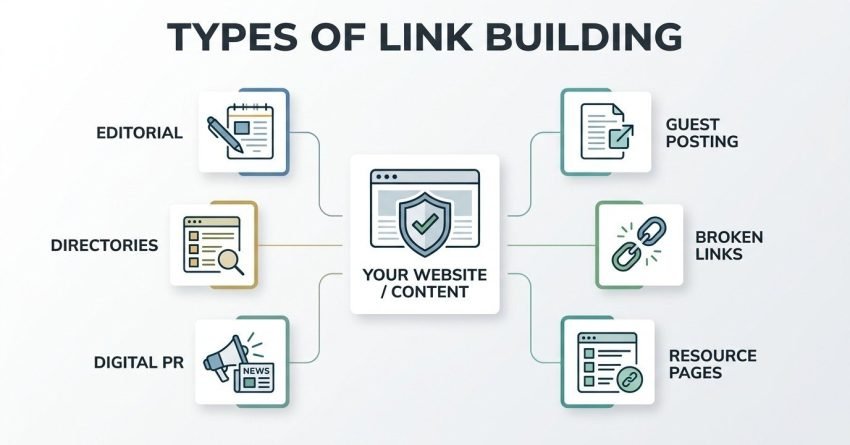
This guide covers what link building actually is and how it earns ranking power, the six core methods editorial, guest posting, broken link building, resource pages, digital PR, and directories how these methods compare against each other, and how to measure results, budget realistically, and avoid the tactics that get sites penalized.
What Is Link Building and Why Does It Matter for SEO?
Link building is the practice of acquiring hyperlinks from other websites that point back to your own, signaling to search engines that your content is credible and worth ranking. Google’s algorithms treat these links as endorsements, weighting them by the linking site’s authority, relevance, and trustworthiness.
Every link building method exists to earn one of two link types, and understanding this distinction shapes every decision that follows.
Link Equity and How It Passes Between Sites
Link equity is the value or “authority” that flows from one webpage to another through a hyperlink, and it’s diluted by the number of other links on that same page. A page with 90 domain rating and only three outbound links passes far more equity than a page with the same rating and 300 outbound links.
Dofollow vs. Nofollow Links
Dofollow links pass link equity directly and count toward rankings, while nofollow links (marked with a rel=”nofollow” attribute) historically did not. Google’s own documentation now treats nofollow as a “hint” rather than a strict directive, meaning some nofollow links may still carry limited ranking value depending on context.
Editorial Link Building (Earned Links)
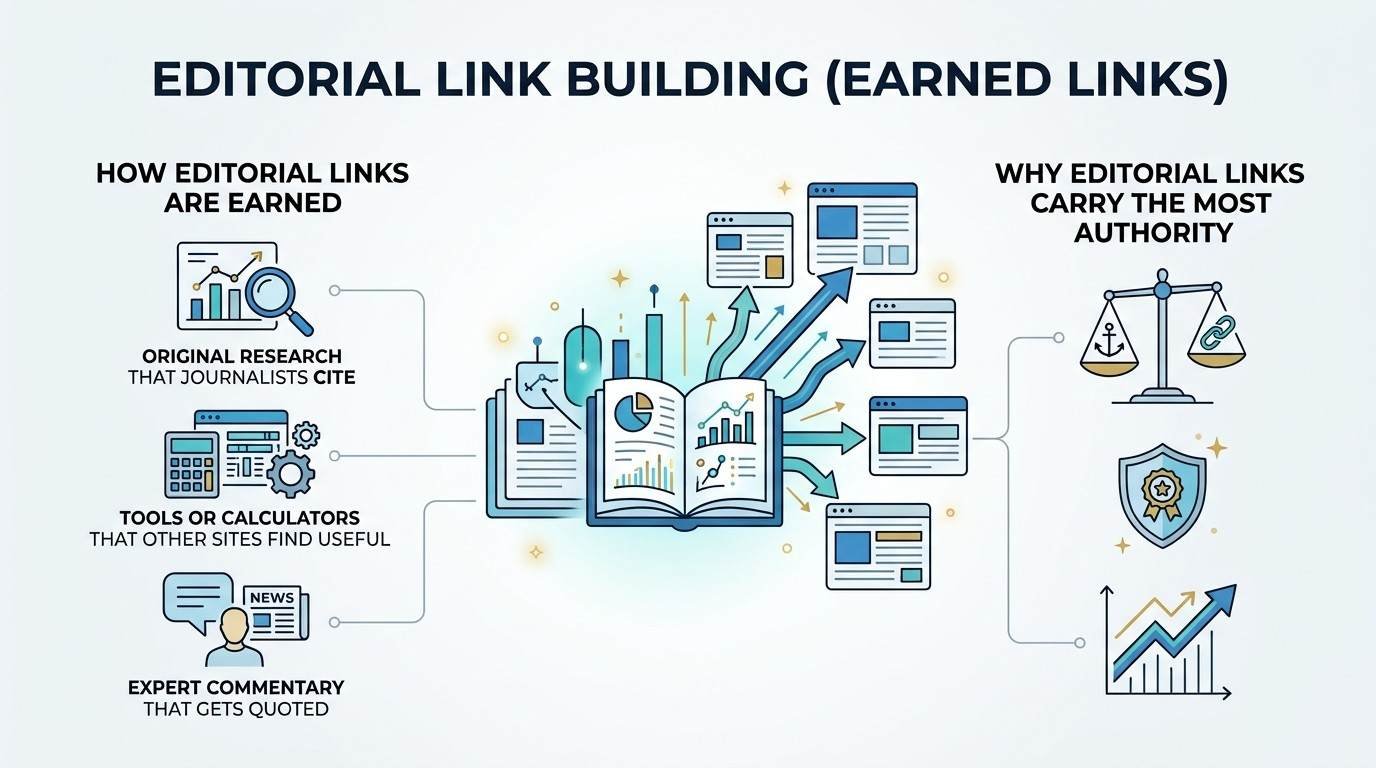
Editorial link building is the process of earning backlinks naturally because other publishers find your content valuable enough to reference without being asked. This is the method search engines reward most heavily because it can’t be faked at scale.
How Editorial Links Are Earned
Editorial links come from three main triggers: original research that journalists cite, tools or calculators that other sites find useful enough to reference, and expert commentary that gets quoted in roundups or news coverage. I’ve seen a single well-designed data study generate more editorial links in six months than a year of manual outreach.
The process typically follows this sequence:
- Identify a content gap where no comprehensive resource exists
- Create original data, research, or a tool that fills that gap
- Publish it with a clean, linkable URL structure
- Promote it to journalists, bloggers, and industry newsletters covering the topic
- Monitor mentions and follow up where attribution exists without a link
Why Editorial Links Carry the Most Authority
Editorial links carry more ranking weight than manually built links because search engines can distinguish between links given freely and links acquired through direct request or payment. An Ahrefs study of over 2 million pages found that pages with more referring domains from editorially earned sources consistently outranked pages with larger but more manually built link profiles.
Guest Posting as a Link Building Method
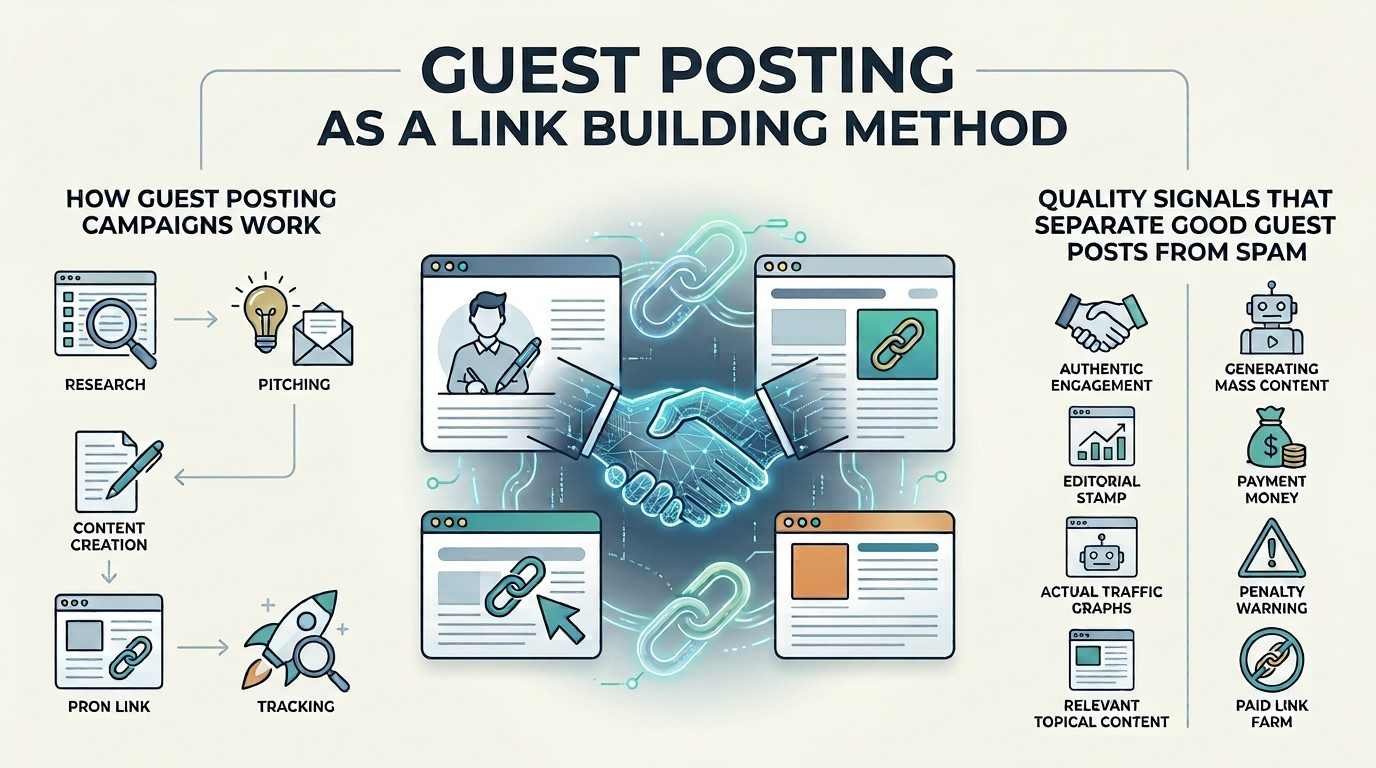
Guest posting is a link building method where you write and publish an article on someone else’s website in exchange for a byline link back to your own site. It remains one of the most scalable link acquisition tactics when done on genuinely relevant, moderated publications.
How Guest Posting Campaigns Work
A guest posting campaign generally moves through five stages, each of which determines whether the resulting link actually helps rankings:
- Build a target list of publications relevant to your industry and audience
- Pitch topic ideas tailored to each publication’s existing content gaps
- Write original, non-duplicated content that meets the site’s editorial bar
- Include one contextual link back to a relevant page, not just the homepage
- Track published links and confirm they remain live over time
Quality Signals That Separate Good Guest Posts from Spam
Publications with genuine editorial review, real traffic, and topical relevance to your niche produce guest post links that hold value, while paid link farms that publish anything for a fee produce links that carry real penalty risk. Google’s spam policies explicitly call out large-scale guest posting campaigns run purely for link acquisition as a violation.
Broken Link Building
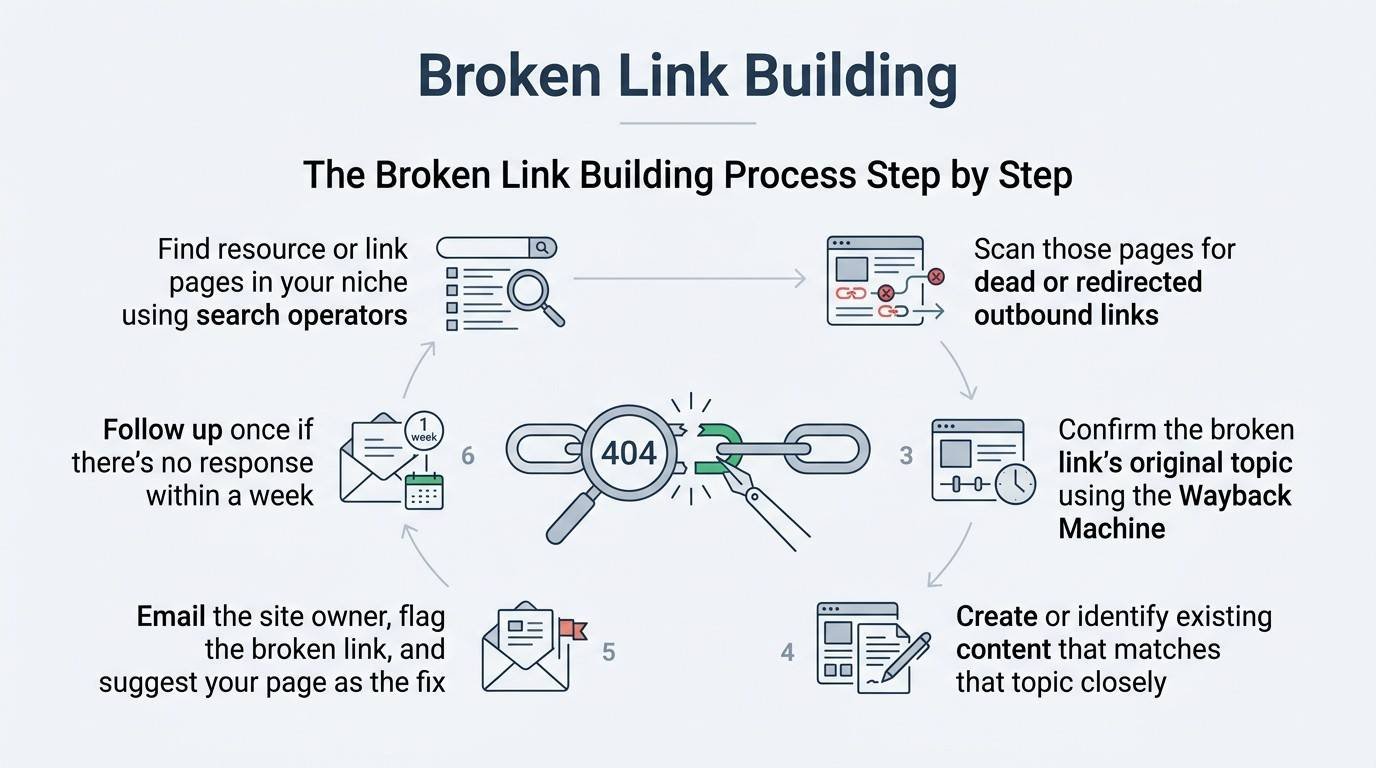
Broken link building is a technique where you find dead links on other websites and suggest your own content as a replacement. It works because webmasters generally want to fix broken links on their own sites, and you’re offering a free solution.
The Broken Link Building Process Step by Step
- Find resource or link pages in your niche using search operators
- Scan those pages for dead or redirected outbound links
- Confirm the broken link’s original topic using the Wayback Machine
- Create or identify existing content that matches that topic closely
- Email the site owner, flag the broken link, and suggest your page as the fix
- Follow up once if there’s no response within a week
This method has a lower success rate than editorial outreach since it depends entirely on webmaster responsiveness, but the acceptance rate rises sharply when the replacement content genuinely matches what was lost.
Resource Page Link Building
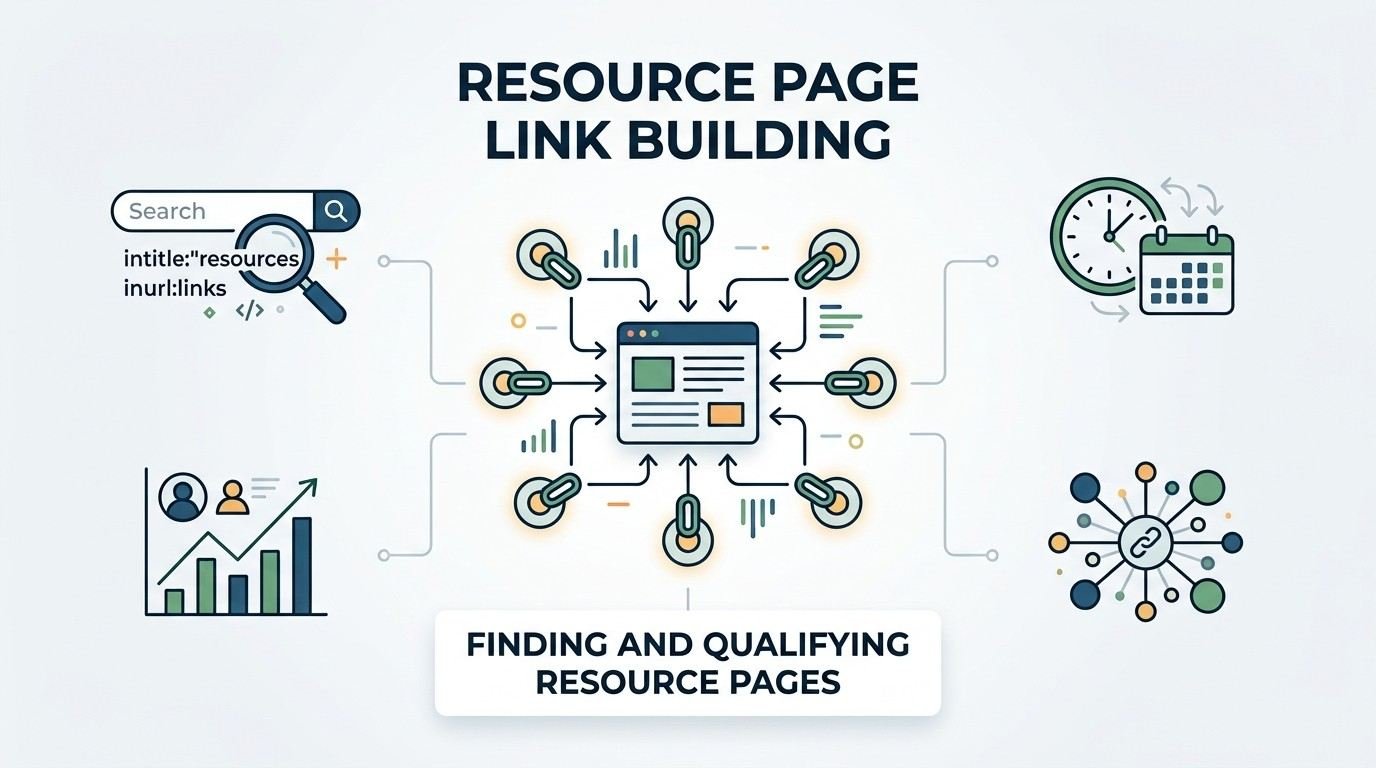
Resource page link building means identifying curated list pages in your industry and requesting inclusion because your content adds genuine value to that list. These pages exist specifically to link out to helpful external content, which makes them naturally receptive to outreach.
Finding and Qualifying Resource Pages
Search operators like intitle:” resources” + [your topic] or inurl: links + [your industry] surface most active resource pages quickly. A resource page worth pursuing shows recent update dates, moderate but real traffic, and links out to a mix of well-known and smaller sites rather than an obvious paid list.
Digital PR and Linkable Asset Creation
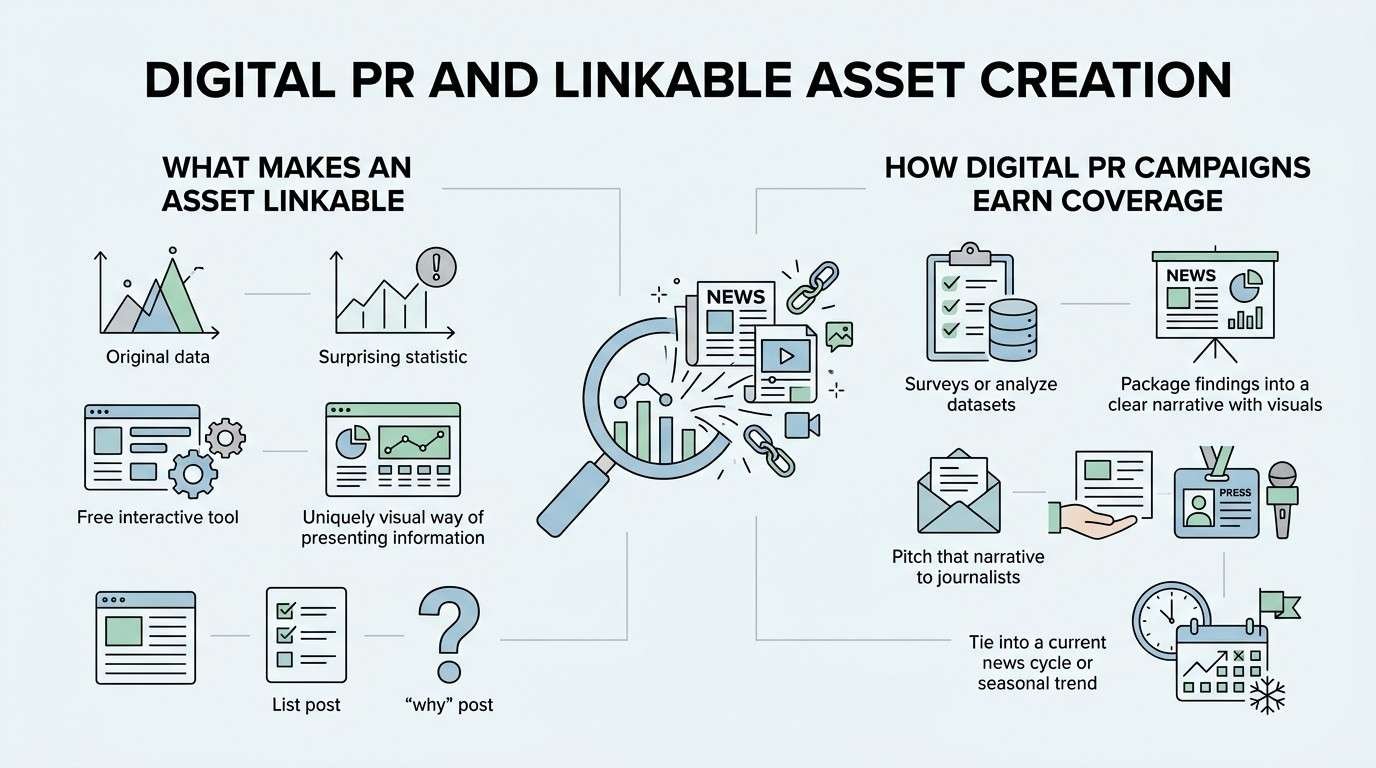
Digital PR is the practice of creating newsworthy content or campaigns specifically designed to attract media coverage and backlinks from journalists and publishers. It blends traditional PR outreach with SEO-focused asset creation.
What Makes an Asset Linkable
A linkable asset needs a genuine hook: original data, a surprising statistic, a free interactive tool, or a uniquely visual way of presenting information nobody else has published. Backlinko’s analysis of over 900 viral content pieces found that list posts and “why” posts generated significantly more shares and links than generic how-to content.
How Digital PR Campaigns Earn Coverage
A typical digital PR campaign surveys a sample audience or analyzes existing datasets, packages the findings into a clear narrative with visuals, and pitches that narrative to journalists covering the relevant beat. Campaigns that tie into a current news cycle or seasonal trend see notably faster pickup than evergreen pitches sent without a timing hook.
Directory and Citation Link Building
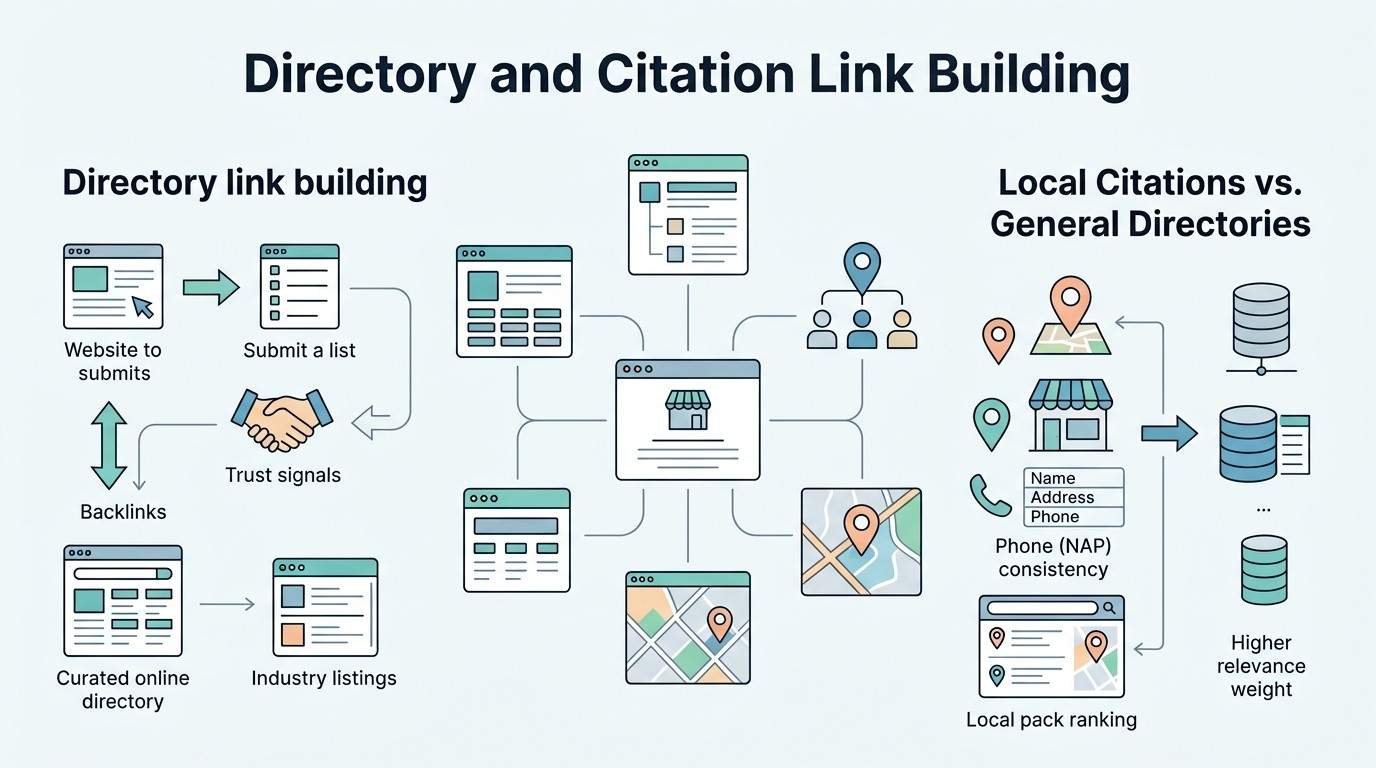
Directory link building involves submitting your website to curated online directories and industry listings to earn a backlink and, for local businesses, establish NAP (name, address, phone) consistency. This method carries lower individual link value than editorial links but supports foundational trust signals.
Local Citations vs. General Directories
Local citations on platforms tied to a specific geography or industry vertical carry more relevance weight than broad, general-purpose directories that accept any business type. Consistent NAP data across citation sources also directly supports local pack rankings, independent of the link value itself.
Comparing the 6 Link Building Methods
The six methods differ significantly in cost, scalability, and risk, which is why most SEO strategies combine several rather than relying on just one.
| Method | Typical Cost | Scalability | Risk Level | Best For |
| Editorial | High effort, low direct cost | Low-Medium | Very Low | Long-term authority |
| Guest Posting | Medium-High | Medium | Medium | Steady, ongoing growth |
| Broken Link Building | Low-Medium | Low | Very Low | Niche sites with existing content |
| Resource Pages | Low | Low-Medium | Very Low | New sites building trust |
| Digital PR | High | Low | Very Low | Brand + authority combined |
| Directories/Citations | Low | High | Low | Local businesses |
Which Method Fits Which Business Stage
Newer sites with limited content typically see faster traction from resource page outreach and directory citations, while established sites with strong content assets get more value from digital PR and editorial link earning.
How Link Building Fits Into a Broader SEO Strategy
Link building works alongside technical SEO and content strategy as one of three interdependent pillars, and none of them compensates fully for weakness in the other two. A technically sound site with strong content but no external links will still struggle to rank against competitors with comparable content and stronger link profiles.
Link Building vs. Technical SEO vs. Content
Technical SEO ensures search engines can crawl and index a site correctly, content satisfies the actual search intent behind a query, and link building signals that other sites vouch for that content’s credibility. Skipping any one of the three typically caps how far the other two can carry rankings.
Link Building Risks and What to Avoid
The biggest risk in link building is acquiring links through manipulative schemes that violate search engine guidelines, which can trigger manual penalties or algorithmic devaluation. Private blog networks, large-scale reciprocal linking, and bulk-purchased links all fall into this category.
Recognizing Manipulative Link Schemes
Warning signs include links sold explicitly for SEO purposes, sitewide footer links exchanged between unrelated businesses, and sudden spikes of hundreds of low-quality links appearing within days. Google’s link spam guidelines treat any link acquired primarily to manipulate rankings as a violation, regardless of the method used to get it.
How to Measure Link Building Success
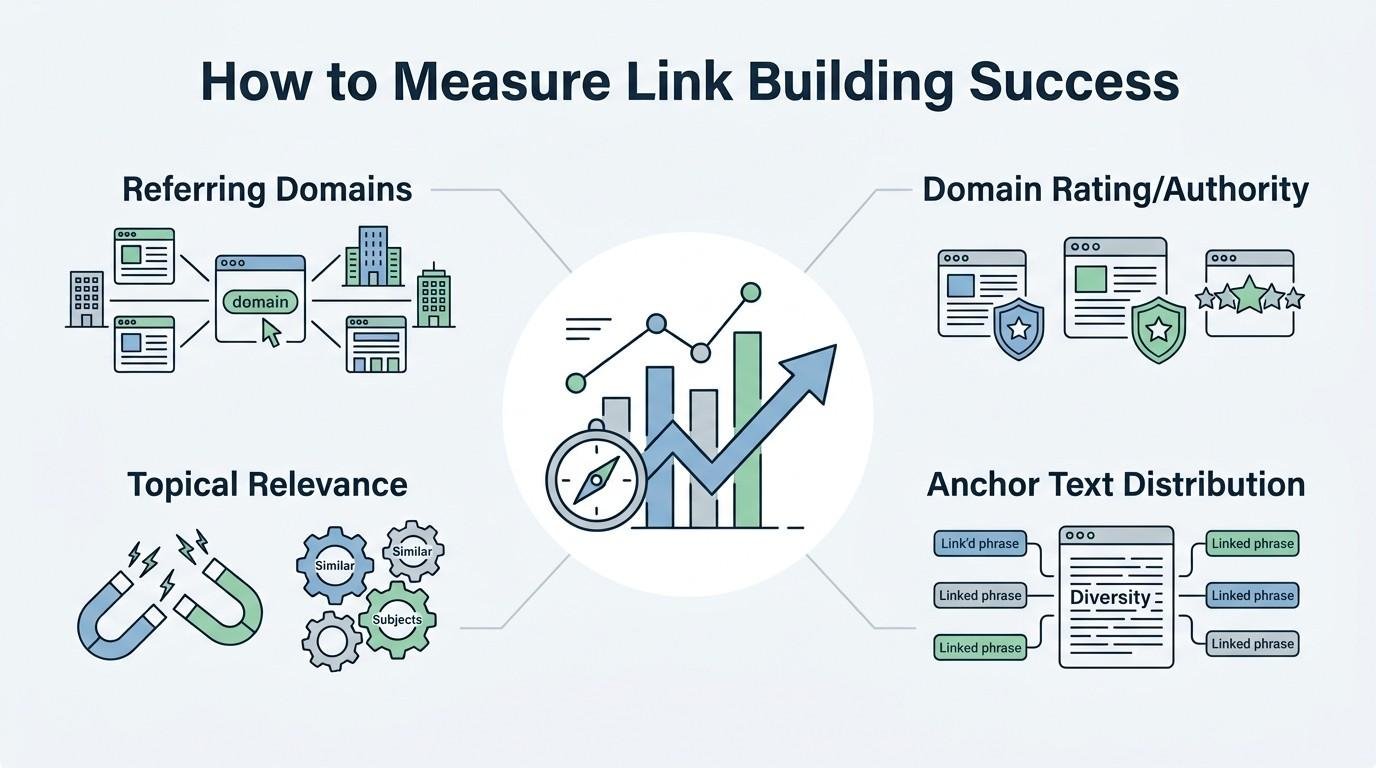
Link building success is measured primarily through referring domain growth, not total backlink count, since ten links from ten unique domains outweigh a hundred links from one domain. Raw link counts inflate easily and mislead more than they inform.
Metrics That Matter: Referring Domains, DR, Relevance
| Metric | What It Measures | Why It Matters |
| Referring Domains | Unique linking websites | Diversity signals natural growth |
| Domain Rating/Authority | Linking site’s overall strength | Higher authority passes more equity |
| Topical Relevance | How related the linking site is | Relevant links carry more weight per Google’s algorithms |
| Anchor Text Distribution | Variety of link phrasing | Over-optimized anchors raise spam flags |
How Much Does Link Building Cost and How Long Does It Take?
Link building typically costs between $1,000 and $20,000 per month depending on method and volume, and most campaigns need four to nine months before rankings shift meaningfully. Editorial and digital PR campaigns sit at the higher end of that cost range but produce more durable results per link.
Realistic Timelines for Link Building Results
Budget and timeline scale together: a $2,000/month resource-page and citation campaign builds a foundation over six to twelve months, while a $10,000+/month digital PR program can produce ranking-moving links within eight to twelve weeks of a successful placement.
Conclusion
Link building spans six distinct methods, each earning link equity differently and carrying its own cost, risk, and scalability profile. Combining several methods strengthens referring domain diversity far more than relying on one channel alone.
We help businesses build link profiles that hold up long after the campaign ends. If you’re ready to strengthen your organic visibility with a strategy built on real authority, White Label SEO Service can build that foundation with you.
Frequently Asked Questions
What is the most effective type of link building?
Editorial link building is generally the most effective because it earns links naturally through content quality rather than direct outreach requests. It carries the lowest penalty risk and the highest long-term ranking value.
How many backlinks do I need to rank?
There’s no fixed number since ranking depends on referring domain quality relative to competitors, not link volume. A page can outrank competitors with fewer, more relevant, higher-authority links.
Is guest posting still effective for SEO?
Guest posting remains effective when done on genuinely relevant, editorially reviewed publications. It becomes a risk factor only when used at scale purely to manufacture links rather than reach real readers.
What is the difference between white hat and black hat link building?
White hat link building earns links through genuine value like content, outreach, and relationships. Black hat methods manipulate rankings through paid links, link farms, or automated schemes that violate search engine guidelines.
How long does it take to see results from link building?
Most link building campaigns show measurable ranking movement within four to nine months, depending on method and competition level. Editorial and digital PR links often take longer to earn but hold value longer.
Can I do link building myself, or should I hire an agency?
Smaller campaigns like resource page outreach and citations are manageable in-house with time and consistency. Larger digital PR or editorial campaigns typically need specialized relationships and skills agencies already have built.
How do I know if a backlink is high quality?
A high-quality backlink comes from a topically relevant, real-traffic site with editorial standards, and it uses natural anchor text rather than exact-match keywords. Domain authority matters, but relevance and traffic matter more.