SEO is still worth it for most businesses in 2026, because organic search continues to deliver a lower cost per lead than paid advertising while compounding in value over time. I have watched this debate resurface every time a new algorithm update or AI search feature launches, and the underlying economics haven’t changed. Businesses that publish consistently and fix technical issues keep winning traffic other channels can’t touch.
The stakes are higher now because AI search tools are reshaping how people find answers, and budgets are tighter than they were two years ago. Every wasted dollar on the wrong channel compounds against you.
We’re covering how SEO ROI actually gets measured and what current data shows, the core components that drive results and how rankings work today, realistic timelines and industry benchmarks, and how to budget for SEO and spot the warning signs of a strategy that isn’t working.
What Does “SEO Is Worth It” Actually Mean in 2026?
“SEO is worth it” means the traffic, leads, and revenue an organic strategy generates exceed what you’d spend to acquire the same results through other channels. I think this question gets muddied because people compare SEO’s slow start to paid ads’ instant results, without accounting for what happens after month six.
How SEO ROI Is Measured
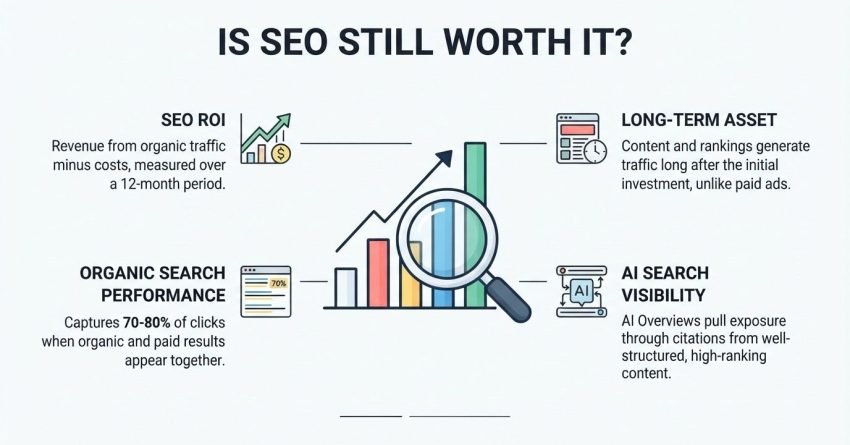
SEO ROI is measured by comparing the total cost of your SEO investment against the revenue generated from organic traffic over a defined period, typically 12 months. I calculate it using (Revenue from Organic – Cost of SEO) / Cost of SEO, multiplied by 100.
This works cleanly once you have consistent organic traffic data flowing through Google Analytics and a clear attribution model. Most businesses I’ve worked with underestimate how long it takes to get clean data.
Short-Term Cost vs. Long-Term Asset Value
SEO behaves more like building an asset than buying an ad slot, because content and rankings keep generating traffic long after the initial investment. A blog post ranking on page one can keep pulling in visitors for years without additional spend.
Paid ads stop the moment you stop paying. That distinction alone changes how I advise clients to think about budgeting for SEO over a 12–24 month window rather than a single quarter.
Is SEO Still Effective in 2026? The Data Behind the Question
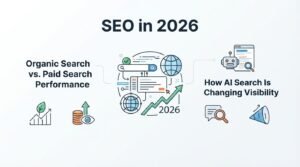
SEO remains effective in 2026, with organic search still driving a larger share of website traffic than any paid channel across most industries. I’ve seen this hold true across e-commerce, B2B, and local service clients alike, even as search results pages get more crowded with ads and AI answers.
Organic Search vs. Paid Search Performance
Organic search results receive significantly more clicks than paid ads on the same search results page, according to a 2024 study by Backlinko analyzing over 4 million search queries. The study found organic listings capture roughly 70-80% of clicks when both organic and paid results appear together.
That gap exists because users have learned to associate ads with commercial intent and organic results with genuine relevance. I still see this pattern hold steady across nearly every niche I audit.
How AI Search Is Changing Visibility
AI Overviews and AI-generated answers are changing how visibility gets measured, because a page can now earn exposure through citation rather than a traditional blue link click. Google’s own documentation confirms AI Overviews pull directly from top-ranking, well-structured content.
This shifts the goal for technical SEO foundations toward extractable, clearly structured content rather than just keyword placement. Pages built for humans first tend to earn these citations more reliably than pages stuffed with keywords.
SEO ROI Statistics Business Owners Should Know
SEO generates one of the highest returns among digital marketing channels, with a 2024 report from Semrush showing that organic search drives over 1,000% more traffic than organic social media for the average website. I bring this stat up constantly with clients who are debating whether to shift budget away from content into social ads.
Average Conversion Rates from Organic Traffic
| Traffic Source | Average Conversion Rate |
| Organic Search | 2.4% |
| Paid Search | 1.9% |
| Social Media | 0.7% |
| Direct Traffic | 3.1% |
HubSpot’s 2024 marketing benchmark report shows organic search converting at nearly double the rate of paid search across surveyed industries, largely because organic visitors are further along in their research.
Cost Per Lead: SEO vs. PPC vs. Social Ads
SEO’s cost per lead drops the longer a campaign runs, while PPC and social ad costs stay flat or rise as competition increases. I typically see SEO’s cost per lead fall below paid channels somewhere between month 7 and month 12, depending on the industry.
Comparing SEO versus paid advertising side by side over a full year, rather than a single month, is the only fair way to judge which channel actually wins on cost efficiency.
How Long Does SEO Take to Show Results?
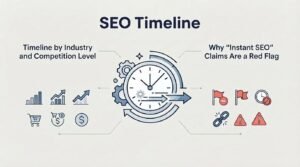
SEO typically takes four to six months to show measurable traffic gains, and eight to twelve months to reach significant ROI, depending on competition and starting domain authority. I tell every new client this upfront because setting the wrong expectation kills more SEO campaigns than any algorithm update.
Timeline by Industry and Competition Level
Low-competition local niches can see ranking movement within 60–90 days, while competitive national industries like finance or SaaS often need 9–12 months before meaningful traffic arrives. Site age, existing authority, and content velocity all shift this timeline in either direction.
I’ve watched brand-new domains in competitive spaces take over a year to break into page one, while an established local business site claimed top rankings within two months.
Why “Instant SEO” Claims Are a Red Flag
Any agency promising first-page rankings within 30 days is either using manipulative tactics that risk penalties or simply misrepresenting how search algorithms work. Google itself needs time to crawl, index, and build trust signals around new or updated content.
I treat this promise as an automatic disqualifier when a client mentions they were pitched by another provider making that claim.
The Core Components That Drive SEO ROI
SEO ROI comes from three interconnected pillars working together: technical health, content quality, and authority signals. Weakness in any one of these three areas caps how much return the other two can generate, no matter how much budget you throw at them.
Technical SEO Foundations
Technical SEO is the process of optimizing a website’s infrastructure so search engines can crawl, index, and render its pages correctly. Site speed, mobile usability, and crawlability issues account for a large share of ranking ceilings I find during audits.
A site with broken internal linking or slow load times can produce great content that never gets the visibility it deserves.
Content Strategy and Topical Authority
Topical authority is the depth and breadth of coverage a website demonstrates across a specific subject area, and it’s become one of the strongest predictors of ranking performance I track. Building content strategy around topical authority means publishing interconnected pages that fully answer a subject rather than isolated, disconnected posts.
Sites that build comprehensive topic clusters consistently outrank sites publishing scattered, unrelated content, even when the scattered site has more total pages.
Link Building and Authority Signals
Link building is the process of earning hyperlinks from other websites to signal trust and relevance to search engines. Ahrefs’ 2024 ranking factors study found a strong correlation between the number of referring domains and higher search rankings across nearly one million pages analyzed.
Quality still beats quantity here. A handful of relevant, authoritative links outperforms dozens of low-value directory submissions.
How Search Engines Rank Websites Today
Search engines rank websites using hundreds of signals grouped into a few dominant categories: relevance, authority, technical performance, and user experience. Google’s algorithm weighs these signals differently depending on the query type and industry.
Core Ranking Factors in 2026
Content relevance and depth, backlink authority, page experience signals, and demonstrated expertise now carry the most measurable weight in ranking outcomes. Google’s Search Quality Rater Guidelines explicitly reference expertise and trustworthiness as core evaluation criteria for raters.
E-E-A-T and Why It Matters More Than Ever
E-E-A-T stands for Experience, Expertise, Authoritativeness, and Trustworthiness, and it’s the framework Google’s quality raters use to judge content credibility. Sites in health, finance, and legal niches feel this weighting most heavily, since Google applies stricter scrutiny to topics that affect people’s money or well-being.
Demonstrating first-hand experience through E-E-A-T signals now separates ranking pages from pages that simply repeat what competitors already said.
SEO vs. Paid Advertising: Which Delivers Better Long-Term ROI?
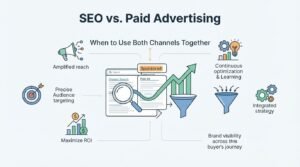
SEO delivers better long-term ROI than paid advertising because organic rankings continue generating traffic without ongoing spend, while paid ads stop producing results the moment the budget runs out. I generally recommend paid ads for immediate revenue needs and SEO for sustainable, compounding growth.
When to Use Both Channels Together
Running paid ads alongside SEO fills the traffic gap while organic rankings build, and it lets you validate which keywords convert before investing months of content effort into them. I often use PPC data to prioritize which topics deserve the heaviest SEO investment first.
This combined approach shortens the perceived wait time for ROI, since paid traffic generates revenue immediately while the organic strategy matures in the background.
Industry-Specific SEO Trends and Benchmarks
SEO performance and timelines vary significantly by industry, with local service businesses typically seeing faster results than national e-commerce or SaaS companies. Competition density and the sophistication of existing top-ranking sites both drive this variance.
SEO for B2B vs. B2C Businesses
B2B SEO strategies tend to target longer, more technical search queries with smaller search volumes but higher conversion value per lead. B2C strategies chase higher-volume, more competitive keywords where a single ranking can drive thousands of monthly visits.
I structure content plans differently for each: B2B leans on in-depth guides and case studies, while B2C often benefits more from category and product page optimization.
Local SEO vs. National SEO ROI Differences
Local SEO typically produces faster, more measurable ROI because ranking for “[service] near me” queries requires competing with a smaller, geographically limited pool of businesses. National SEO campaigns face competition from every business in the country targeting the same terms.
A local SEO strategy often shows results in half the time of a comparable national campaign, simply due to the reduced competition pool.
Common Reasons SEO Fails to Deliver ROI
SEO fails to deliver ROI most often because of unrealistic timelines, technical neglect, or inconsistent content production rather than any fundamental flaw in the channel itself. I’ve audited dozens of “failed” SEO campaigns, and the pattern repeats far more than it varies.
Unrealistic Expectations and Timelines
Businesses that expect page-one rankings within 60–90 days often abandon SEO right before it starts working, since most meaningful traffic gains appear after month four. This mismatch between expectation and reality causes more premature campaign cancellations than any competitive or technical obstacle.
Poor Technical Foundations
A website riddled with broken links, slow load speeds, or poor mobile experience can suppress rankings regardless of how strong the content strategy is. I’ve seen technically weak sites cap out on page two despite publishing genuinely excellent content month after month.
Fixing technical SEO issues before scaling content production consistently produces faster, more durable ranking gains.
How to Calculate Your Expected SEO ROI
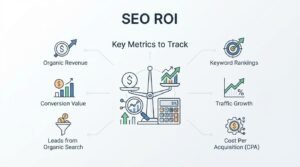
Calculating expected SEO ROI starts with estimating organic traffic potential for your target keywords, then multiplying by your site’s expected conversion rate and average customer value. I walk clients through this exact process before we agree on any campaign scope.
Key Metrics to Track
- Organic traffic growth month over month, tracked in Google Search Console
- Keyword ranking positions for target terms
- Organic conversion rate from traffic to lead or sale
- Customer lifetime value from organic-sourced customers
- Total cost of SEO investment over the measurement period
Tracking these five metrics consistently gives a far clearer ROI picture than looking at traffic or rankings in isolation.
How Much Does SEO Cost in the US?
SEO services in the US typically range from $1,500 to $5,000 per month for small to mid-sized businesses, with enterprise campaigns often exceeding $10,000 monthly. Ahrefs’ 2024 agency pricing survey found the median monthly SEO retainer sits around $2,819 across surveyed agencies.
Factors That Influence SEO Pricing
Industry competitiveness, current site health, content volume needed, and geographic targeting scope all shift pricing significantly. A local single-location business pays far less than a national e-commerce brand competing across dozens of product categories.
Comparing quotes against transparent SEO pricing benchmarks helps identify whether a proposal is realistically scoped or dramatically under- or over-priced for the work involved.
Signs You’re Ready to Invest in SEO
A business is ready to invest in SEO when it has a stable product or service offering, the capacity to fulfill increased demand, and enough runway to wait four to six months for initial traction. Jumping into SEO without this foundation often leads to wasted spend and premature abandonment.
Businesses currently relying entirely on paid ads or referrals, with no organic visibility at all, typically see the steepest early gains once a proper strategy launches.
Future of SEO: Trends Shaping the Next 2–3 Years
SEO is shifting toward optimizing for AI-driven answer engines and zero-click experiences, alongside traditional blue-link rankings. I expect this dual optimization requirement to separate strong SEO providers from weak ones over the next few years.
AI-Driven Search and Answer Engines
AI-driven search engines like Google’s AI Overviews and emerging platforms such as Perplexity now generate direct answers using extracted content from ranking pages. Structuring content to answer questions clearly and directly in the first sentence of each section increases the likelihood of earning these citations.
Zero-Click Searches and Brand Visibility
Zero-click searches occur when a user gets their answer directly on the search results page without clicking through to any website. SparkToro’s 2024 research found nearly 60% of Google searches now end without a click to an external site.
This trend makes brand visibility within the AI-generated answer itself increasingly valuable, even when it doesn’t translate to a direct visit.
Conclusion
SEO’s ROI comes from compounding organic visibility, technical health, and authority signals working together over time. The channel keeps evolving with AI search and zero-click trends, but the fundamentals of earning trust and relevance remain constant. We help businesses build sustainable organic growth strategies through White Label SEO Service. Let’s talk about your timeline and goals.
Frequently Asked Questions
Is SEO worth it for small businesses?
Yes, SEO is worth it for small businesses because it delivers a lower long-term cost per lead than most paid channels. Local businesses often see faster results due to reduced keyword competition in geographically limited searches.
How long does SEO take to work?
SEO typically takes four to six months to show measurable traffic gains and eight to twelve months for significant ROI. Timelines vary based on industry competition, site age, and content production consistency.
What is a good SEO ROI benchmark?
A good SEO ROI benchmark is generally considered 5:1 or higher, meaning five dollars in revenue for every dollar spent. Mature campaigns in low-competition niches can exceed this significantly.
Is SEO better than paid ads?
SEO offers better long-term ROI since rankings continue generating traffic without ongoing spend, while paid ads stop the moment the budget runs out. Paid ads still win for immediate, short-term revenue needs.
How much should I budget for SEO?
Most small to mid-sized US businesses budget between $1,500 and $5,000 per month for SEO services. Enterprise campaigns with a larger scope often exceed $10,000 monthly.
Does SEO still work with AI search growing?
SEO still works because AI search tools pull their answers directly from well-structured, high-ranking organic content. Pages optimized for clarity and direct answers are more likely to earn AI citation.
What are the biggest signs SEO is failing?
The biggest signs SEO is failing include stagnant organic traffic after six months, no keyword ranking improvement, and technical issues left unresolved. Unrealistic timeline expectations also cause premature campaign abandonment before results appear.