White Label SEO Service

Category: SEO

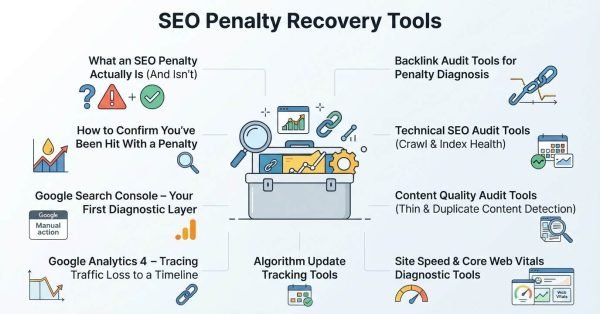
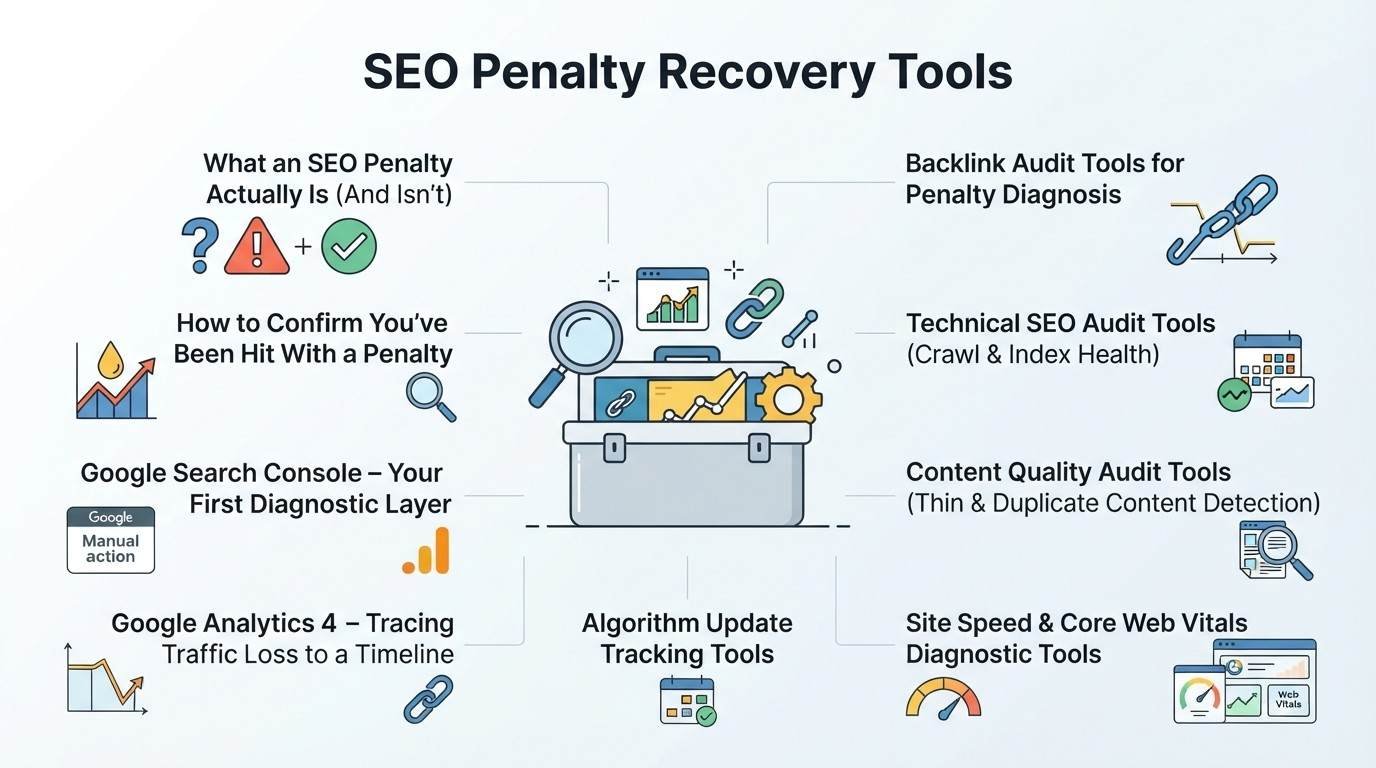
Infographic titled "SEO Penalty Recovery Tools" highlighting what an SEO penalty is and isn't, how to confirm a penalty, Google Search Console as a first diagnostic layer, Google Analytics 4 for tracing traffic loss, algorithm update tracking tools, site speed and Core Web Vitals diagnostics, content quality audit tools for thin and duplicate content, technical SEO audit tools for crawl and index health, and backlink audit tools for penalty diagnosis.

An SEO penalty is a drop in search visibility caused by a manual action from Google

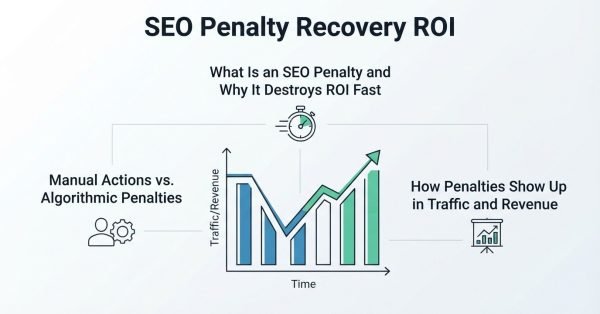
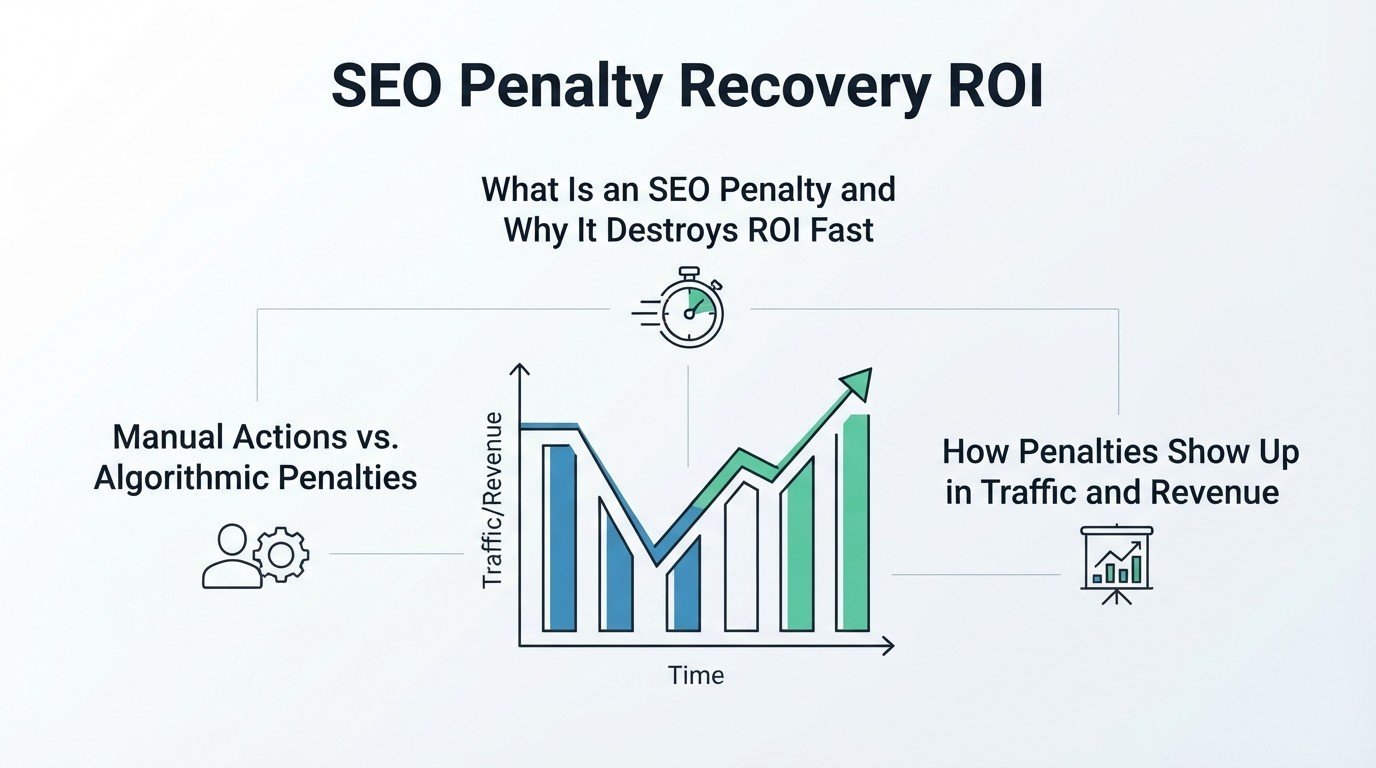
Infographic titled "SEO Penalty Recovery ROI" detailing what an SEO penalty is, why it destroys ROI fast, the differences between manual actions and algorithmic penalties, and how penalties show up in traffic and revenue over time.

SEO penalty recovery restores lost organic visibility after Google issues a manual action or an algorithmic
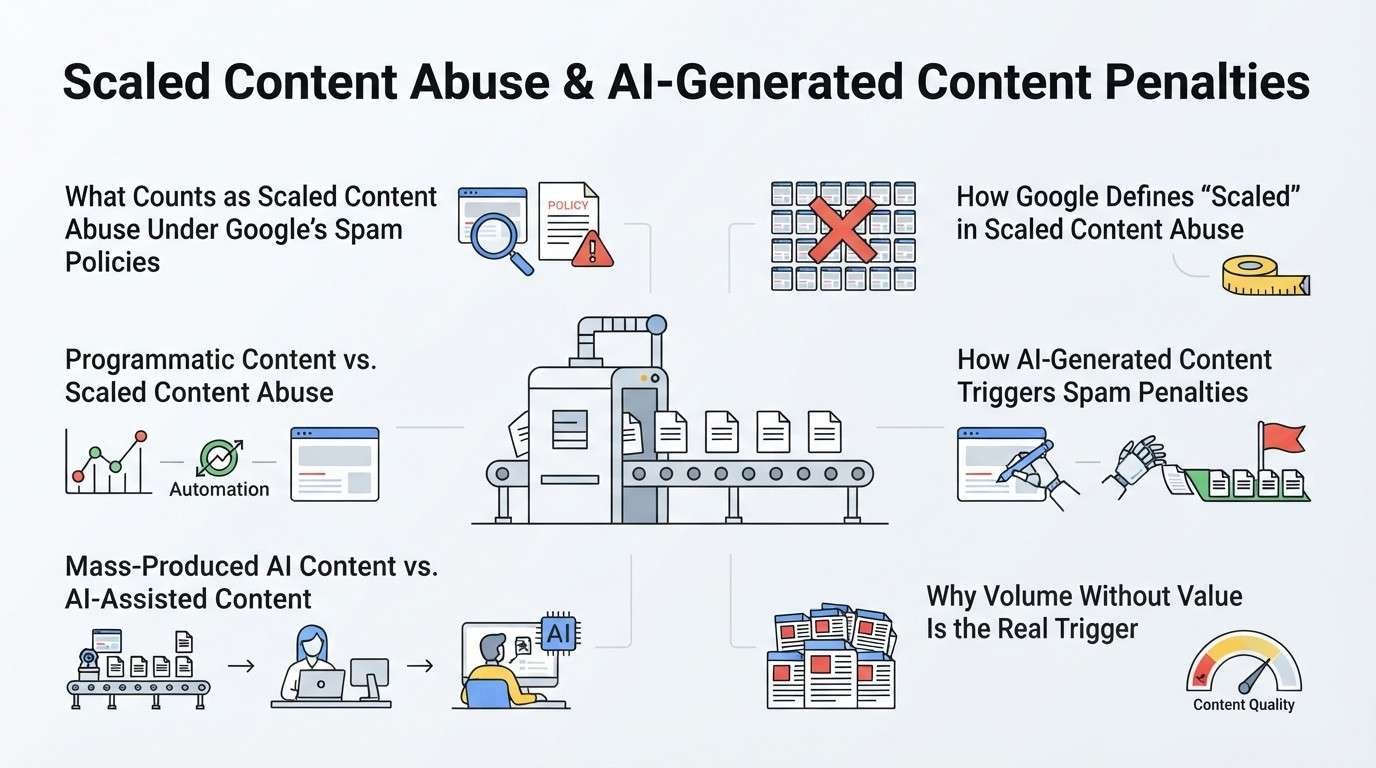
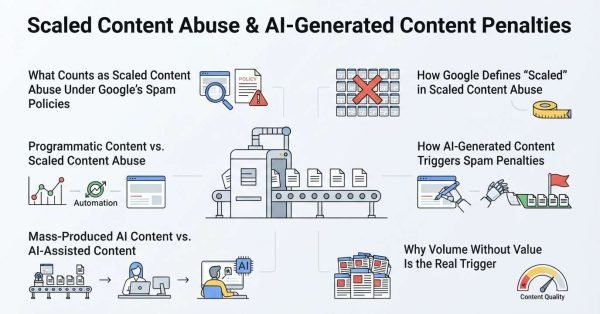
Infographic titled "Scaled Content Abuse & AI-Generated Content Policies" breaking down what counts as scaled content abuse under Google's spam policies, how Google defines scaled, the difference between programmatic content and scaled content abuse, how AI-generated content triggers spam penalties, mass-produced versus AI-assisted content, and why volume without value is the real trigger.

Scaled content abuse is a Google spam classification that targets pages produced in bulk, with little
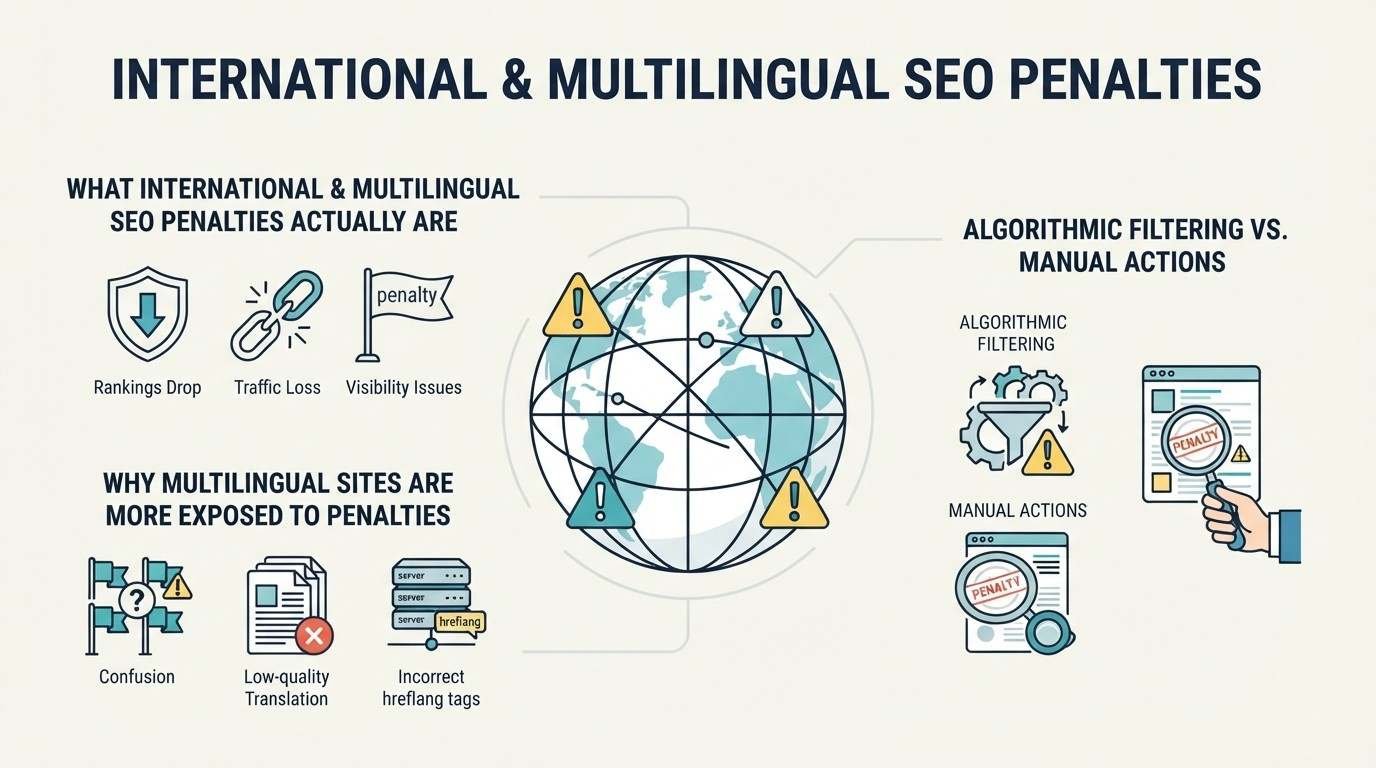
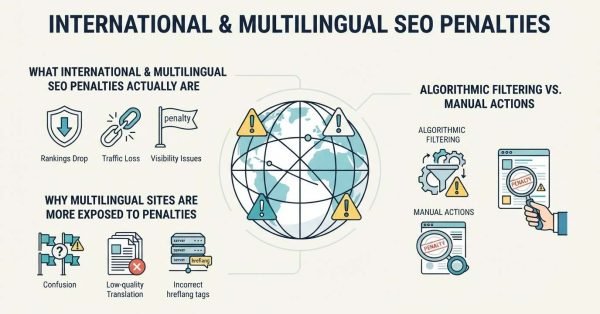
Infographic titled "International & Multilingual SEO Penalties" detailing what penalties are—including rankings drops, traffic loss, and visibility issues—why multilingual sites are exposed due to confusion, low-quality translation, and incorrect hreflang tags, and the difference between algorithmic filtering and manual actions.

I’ve watched multilingual sites lose 40-60% of organic traffic overnight, and hreflang errors are usually the
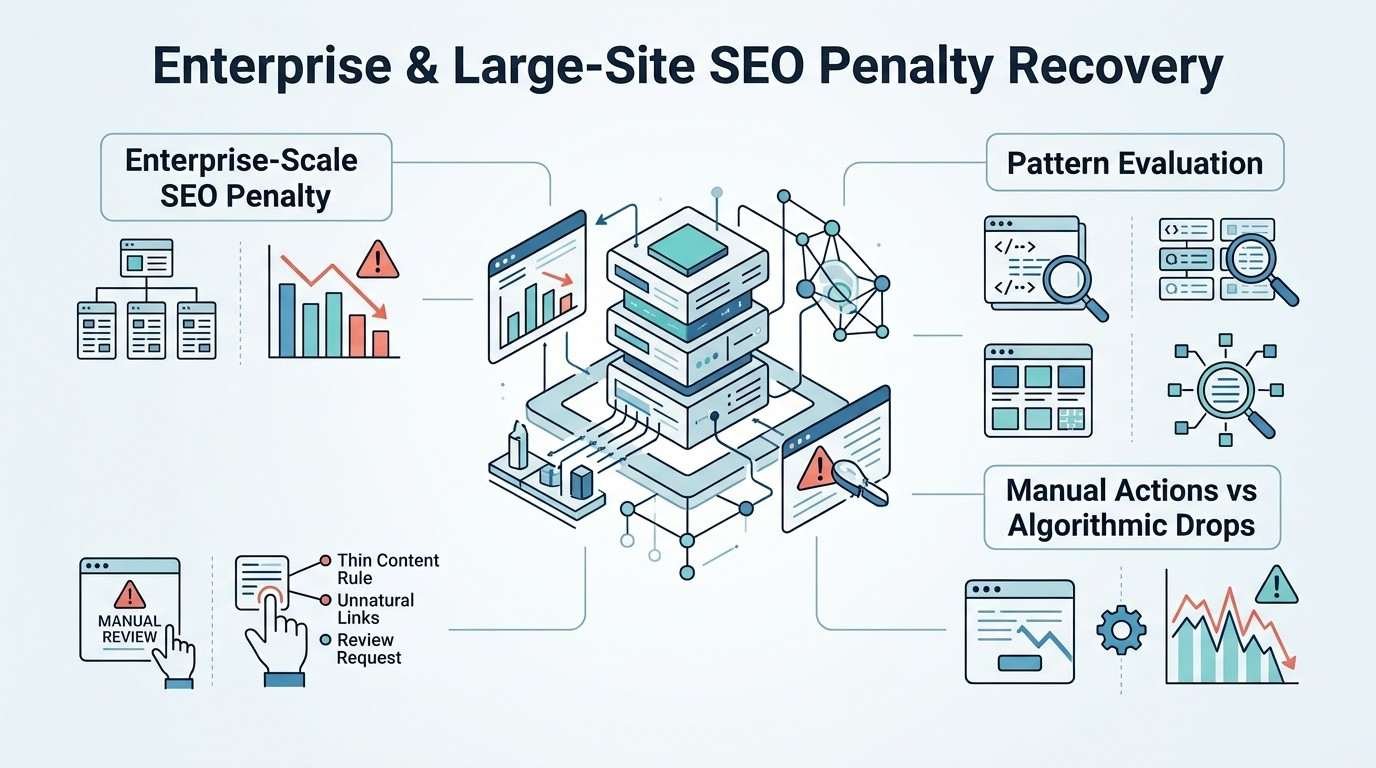
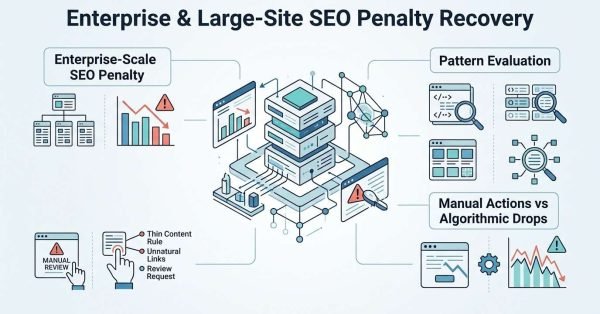
Infographic titled 'Enterprise & Large-Site SEO Penalty Recovery' illustrating enterprise-scale SEO penalties on the left-covering site hierarchies, traffic drops, manual reviews, thin content rules, unnatural links, and review requests-pattern evaluation on the top right, and manual actions versus algorithmic drops on the bottom right, surrounding a central server rack infrastructure graphic.

A single manual action or algorithmic update on an enterprise site can wipe out millions in
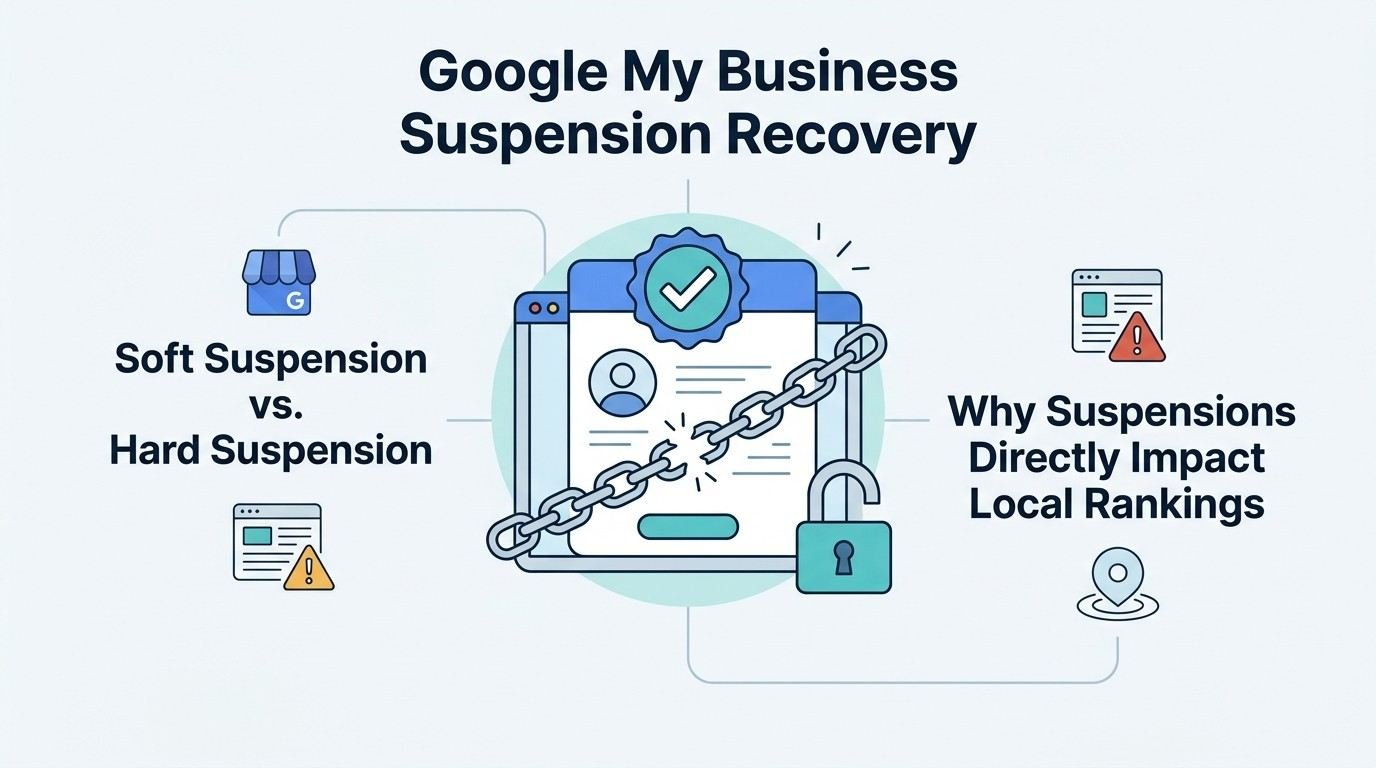
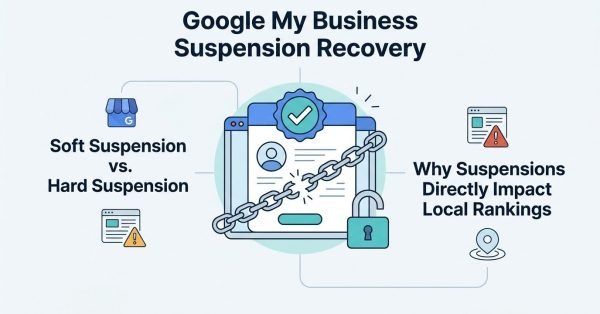
Infographic titled 'Google My Business Suspension Recovery' illustrating soft suspension versus hard suspension on the left, and why suspensions directly impact local rankings on the right, surrounding a central profile document locked with a chain and padlock.

Google suspends a business profile when it detects a violation of its guidelines, which removes the
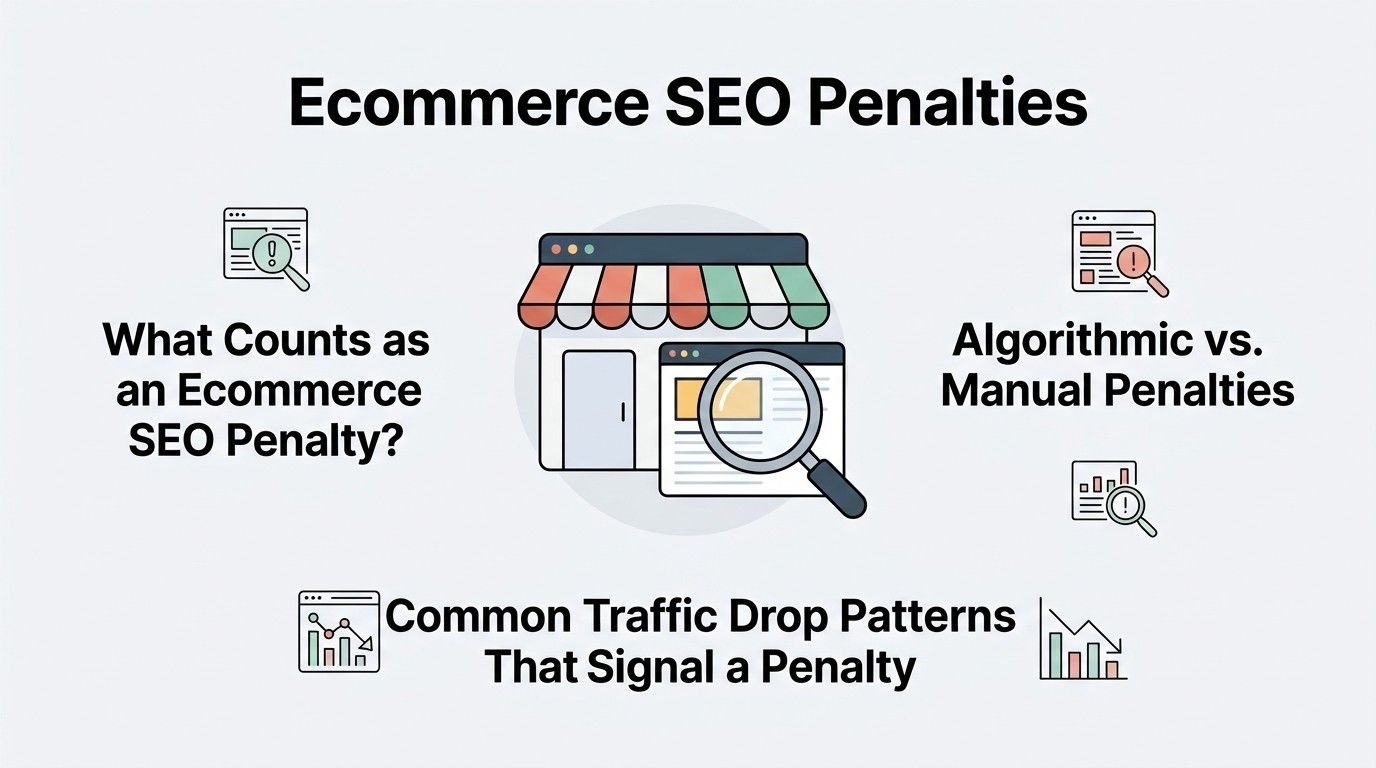
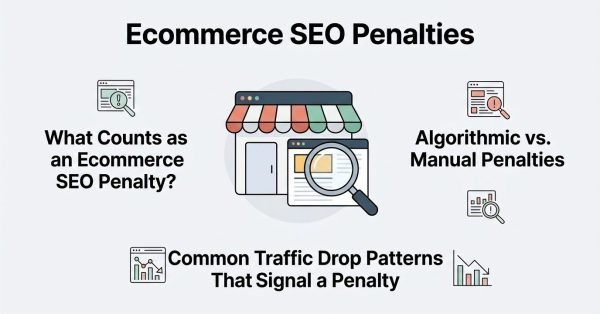
Infographic titled 'Ecommerce SEO Penalties' illustrating what counts as an ecommerce SEO penalty on the left, algorithmic versus manual penalties on the right, and common traffic drop patterns that signal a penalty at the bottom, surrounding a central storefront and magnifying glass icon.

An ecommerce SEO penalty is a ranking or visibility loss triggered either by a manual review
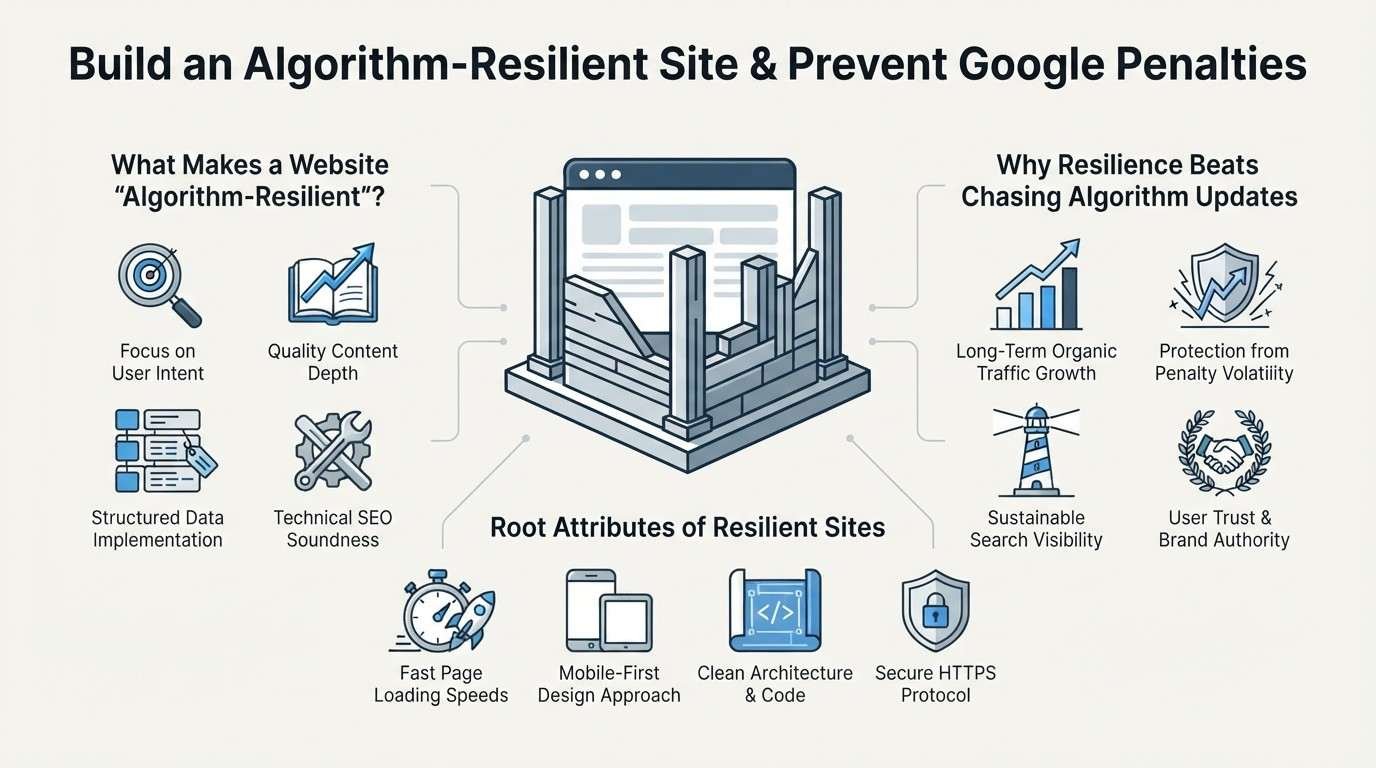
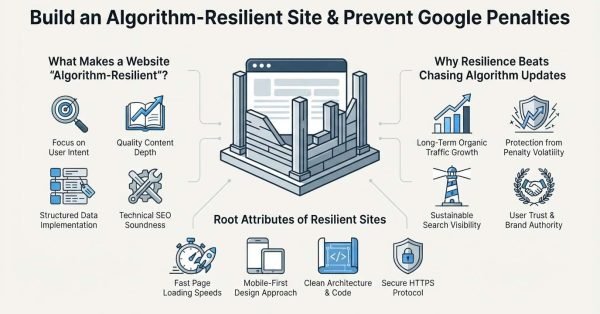
Infographic titled 'Build an Algorithm-Resilient Site & Prevent Google Penalties' illustrating what makes a website algorithm-resilient on the left-covering focus on user intent, quality content depth, structured data implementation, and technical SEO soundness-why resilience beats chasing algorithm updates on the right-covering long-term organic traffic growth, protection from penalty volatility, sustainable search visibility, and user trust and brand authority-and root attributes of resilient sites at the bottom-covering fast page loading speeds, mobile-first design approaches, clean architecture and code, and secure HTTPS protocols, surrounding a central temple pillar structural graphic.

Google rolls out thousands of algorithm changes every year, and most site owners only notice when
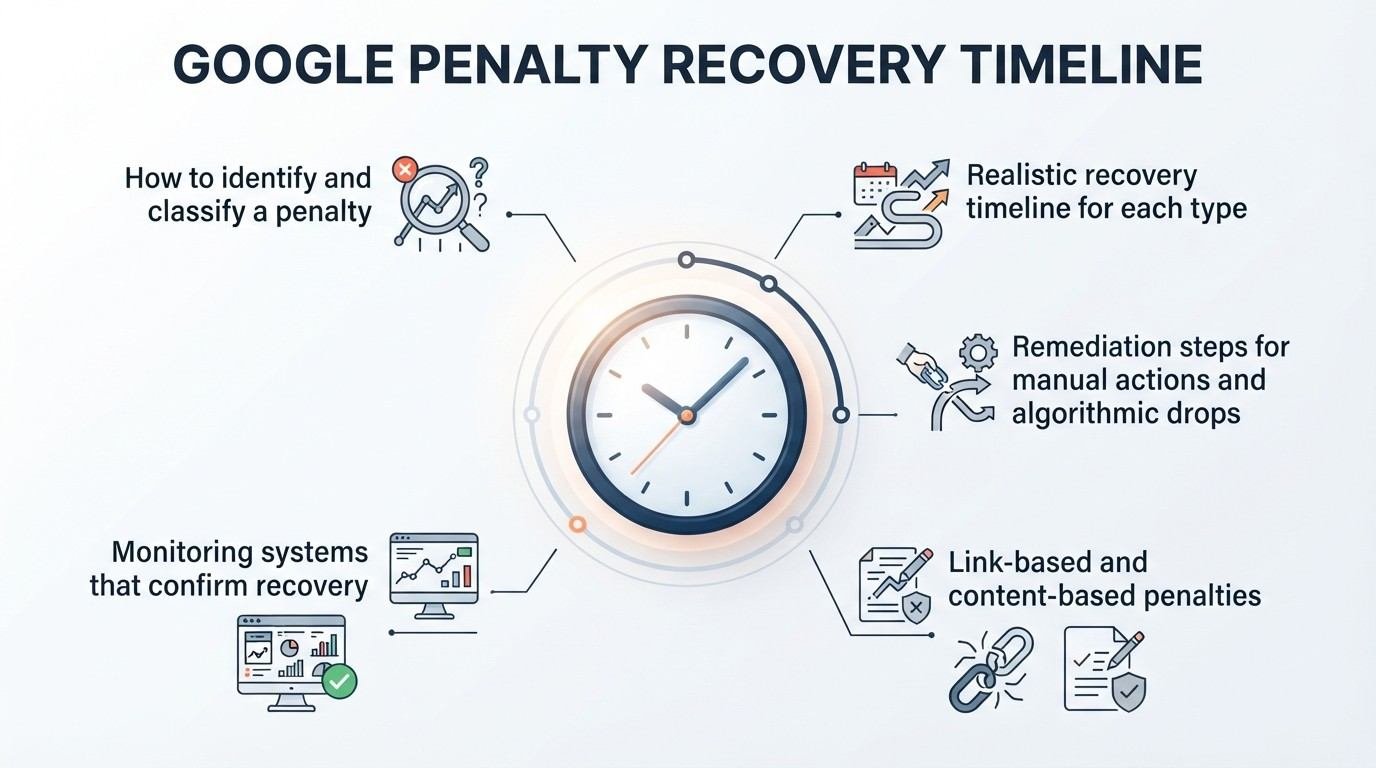
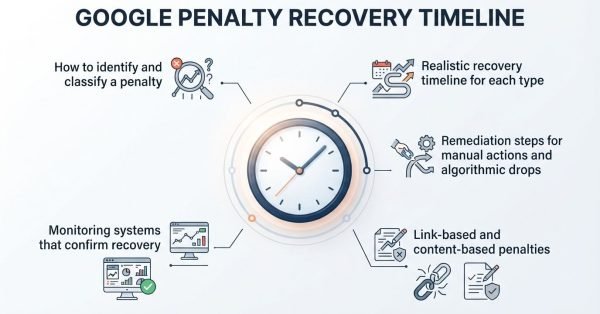
Infographic titled 'GOOGLE PENALTY RECOVERY TIMELINE' illustrating how to identify and classify a penalty on the top left, realistic recovery timelines for each type on the top right, remediation steps for manual actions and algorithmic drops on the middle right, link-based and content-based penalties on the bottom right, and monitoring systems that confirm recovery on the bottom left, surrounding a central clock icon.

Google penalty recovery typically takes anywhere from a few days to twelve months, depending on the
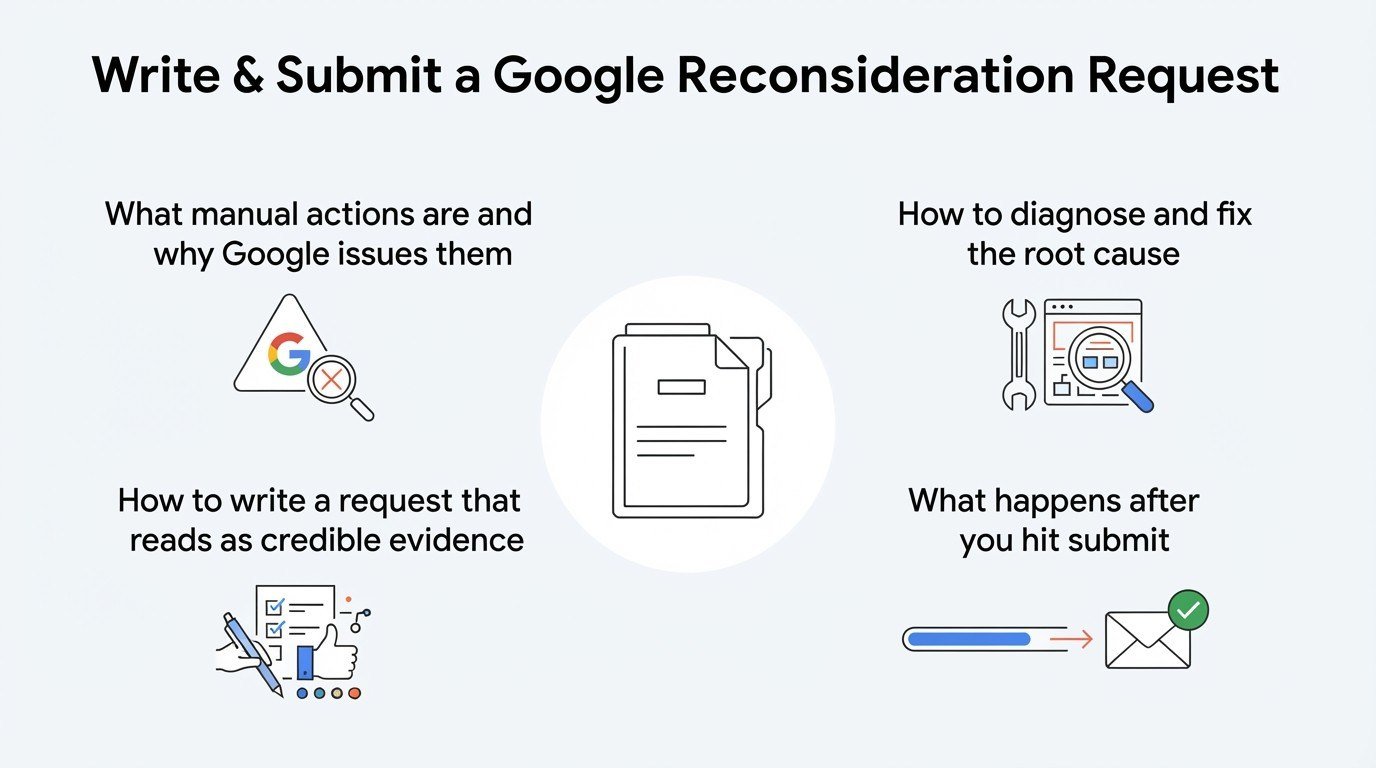
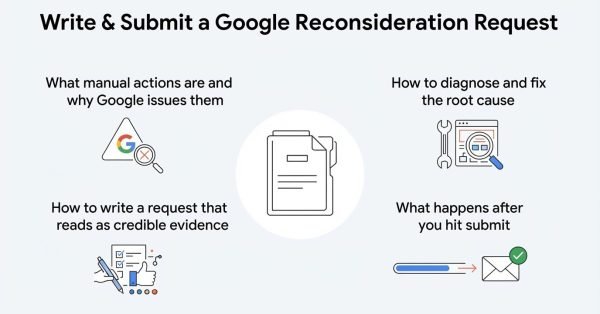
Infographic titled 'Write & Submit a Google Reconsideration Request' illustrating what manual actions are and why Google issues them on the top left, how to write a request that reads as credible evidence on the bottom left, how to diagnose and fix the root cause on the top right, and what happens after you hit submit on the bottom right, surrounding a central document file icon.

A Google reconsideration request is a formal appeal submitted through Search Console asking Google to lift

Request Your Free SEO Audit

Lorem ipsum dolor sit amet, consectetur adipiscing elit. Ut elit tellus, luctus nec ullamcorper mattis, pulvinar dapibus leo.