White Label SEO Service

Category: SEO

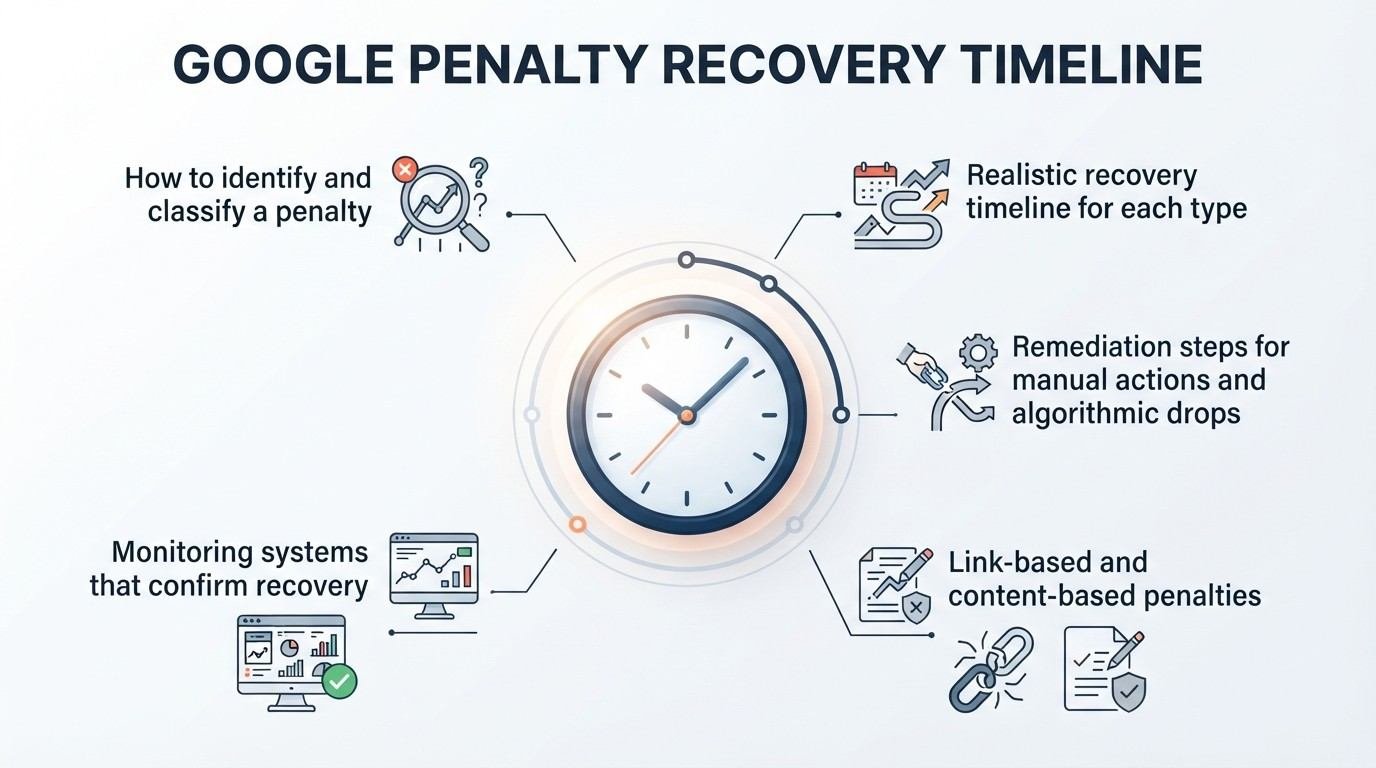
Infographic titled 'Build an Algorithm-Resilient Site & Prevent Google Penalties' illustrating what makes a website algorithm-resilient on the left-covering focus on user intent, quality content depth, structured data implementation, and technical SEO soundness-why resilience beats chasing algorithm updates on the right-covering long-term organic traffic growth, protection from penalty volatility, sustainable search visibility, and user trust and brand authority-and root attributes of resilient sites at the bottom-covering fast page loading speeds, mobile-first design approaches, clean architecture and code, and secure HTTPS protocols, surrounding a central temple pillar structural graphic.

Google rolls out thousands of algorithm changes every year, and most site owners only notice when

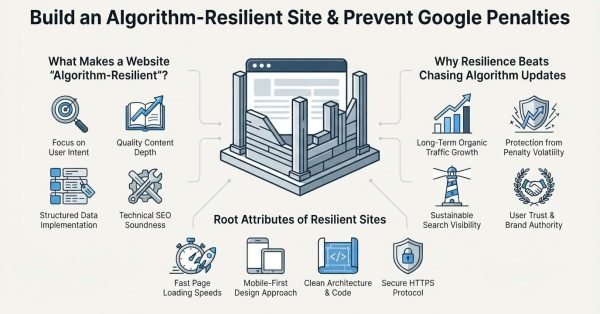
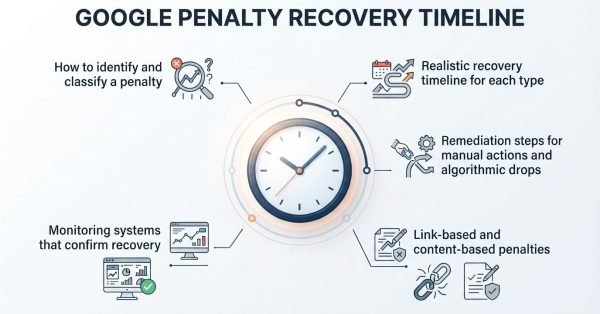
Infographic titled 'GOOGLE PENALTY RECOVERY TIMELINE' illustrating how to identify and classify a penalty on the top left, realistic recovery timelines for each type on the top right, remediation steps for manual actions and algorithmic drops on the middle right, link-based and content-based penalties on the bottom right, and monitoring systems that confirm recovery on the bottom left, surrounding a central clock icon.

Google penalty recovery typically takes anywhere from a few days to twelve months, depending on the
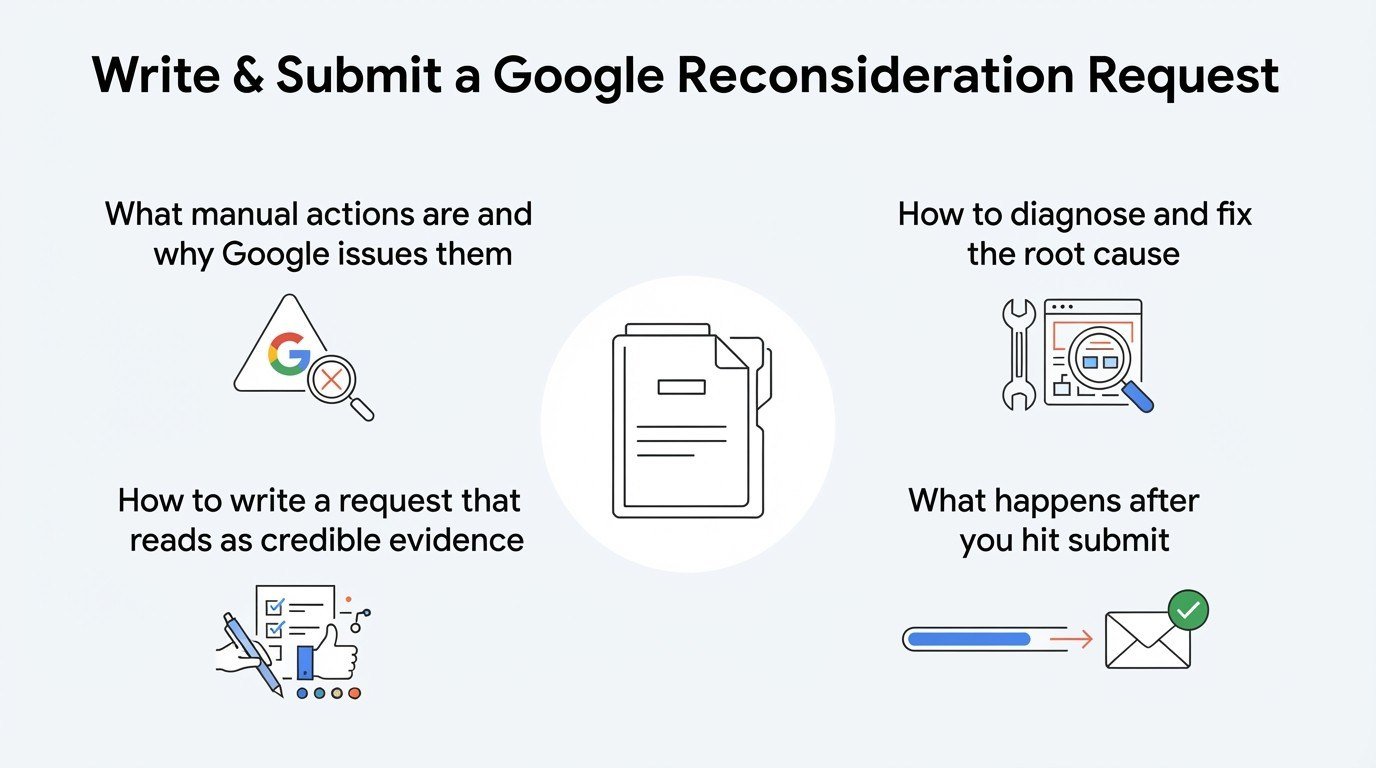
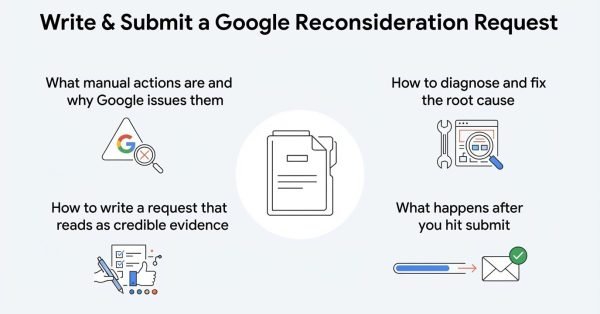
Infographic titled 'Write & Submit a Google Reconsideration Request' illustrating what manual actions are and why Google issues them on the top left, how to write a request that reads as credible evidence on the bottom left, how to diagnose and fix the root cause on the top right, and what happens after you hit submit on the bottom right, surrounding a central document file icon.

A Google reconsideration request is a formal appeal submitted through Search Console asking Google to lift
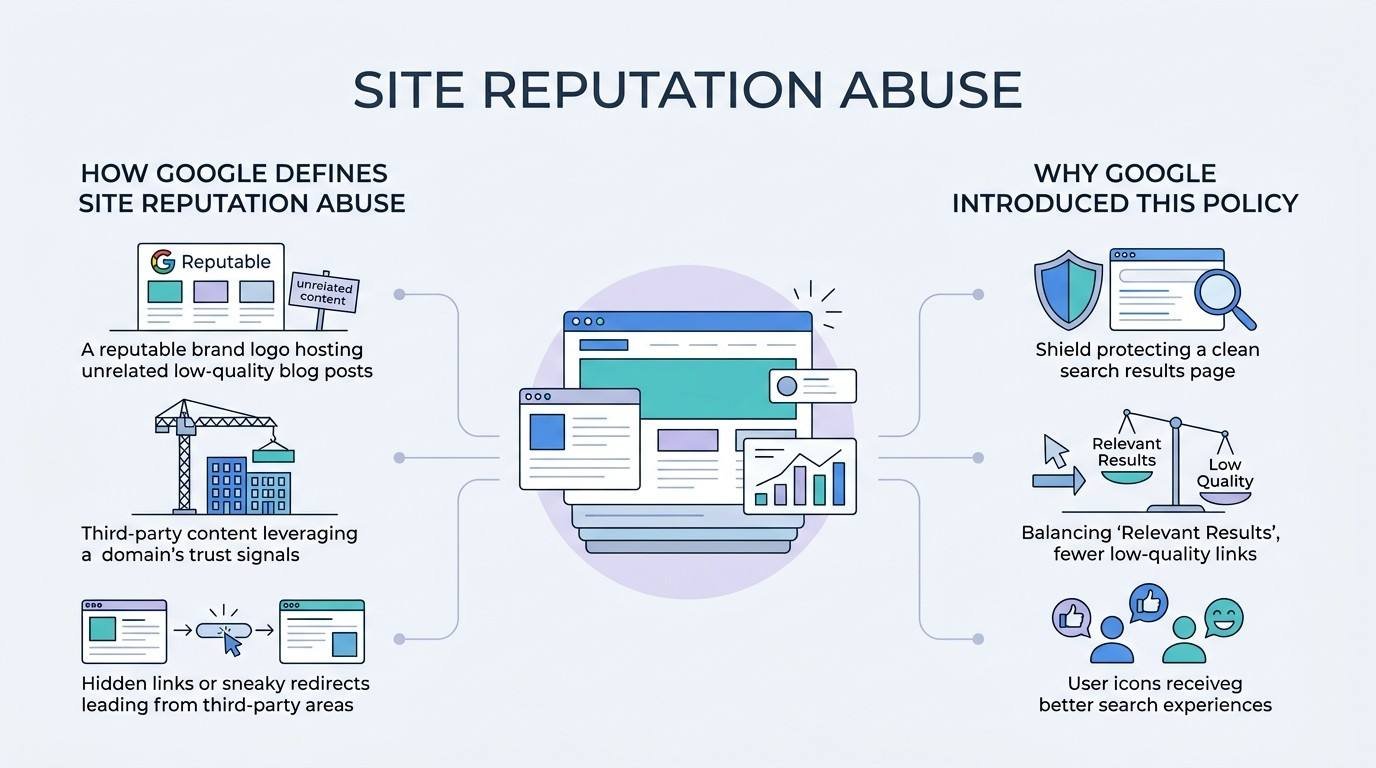
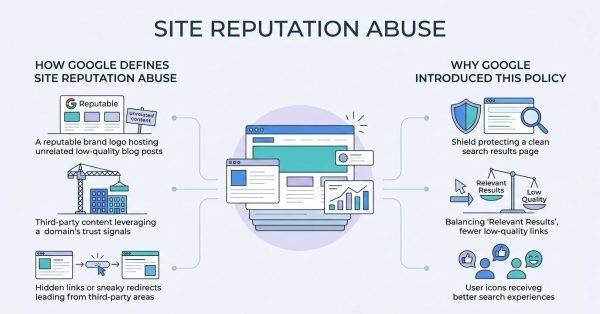
Infographic titled 'Site Reputation Abuse' illustrating how Google defines site reputation abuse on the left—covering reputable brands hosting unrelated low-quality blog posts, third-party content leveraging domain trust signals, and hidden links or sneaky redirects—and why Google introduced this policy on the right—covering clean search result shields, balancing relevant results against low quality, and providing better user experiences—surrounding a central browser and analytics icon.

Site reputation abuse happens when a website hosts low-quality, third-party content primarily to exploit its own
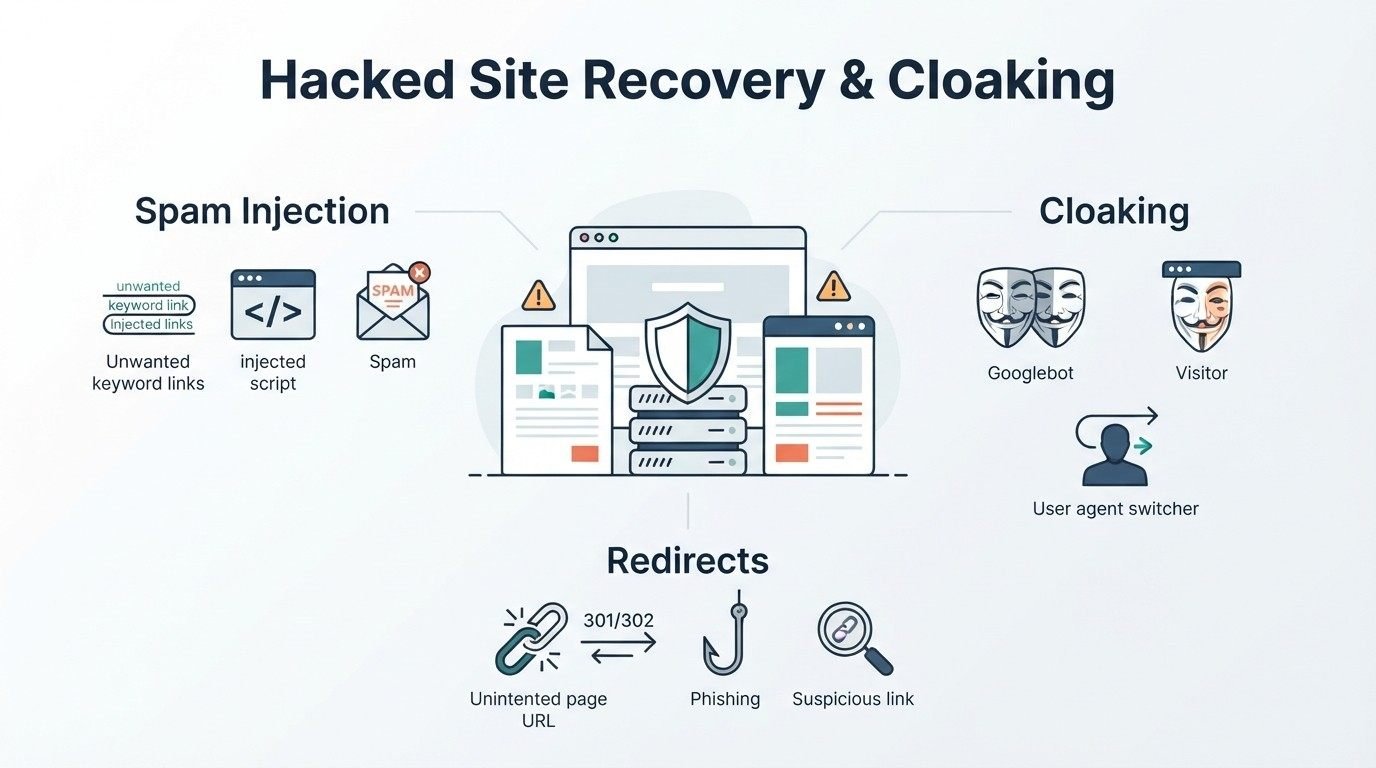
Infographic titled 'Hacked Site Recovery & Cloaking' illustrating spam injection on the left-covering unwanted keyword links, injected scripts, and spam messages-cloaking on the right-covering Googlebot versus visitor differences and user agent switchers—and redirects at the bottom-covering unintended page URLs, 301/302 redirects, phishing, and suspicious links—surrounding a central secure website shield icon.

A hacked website is a site compromised by unauthorized code, content, or redirects, and cloaking is
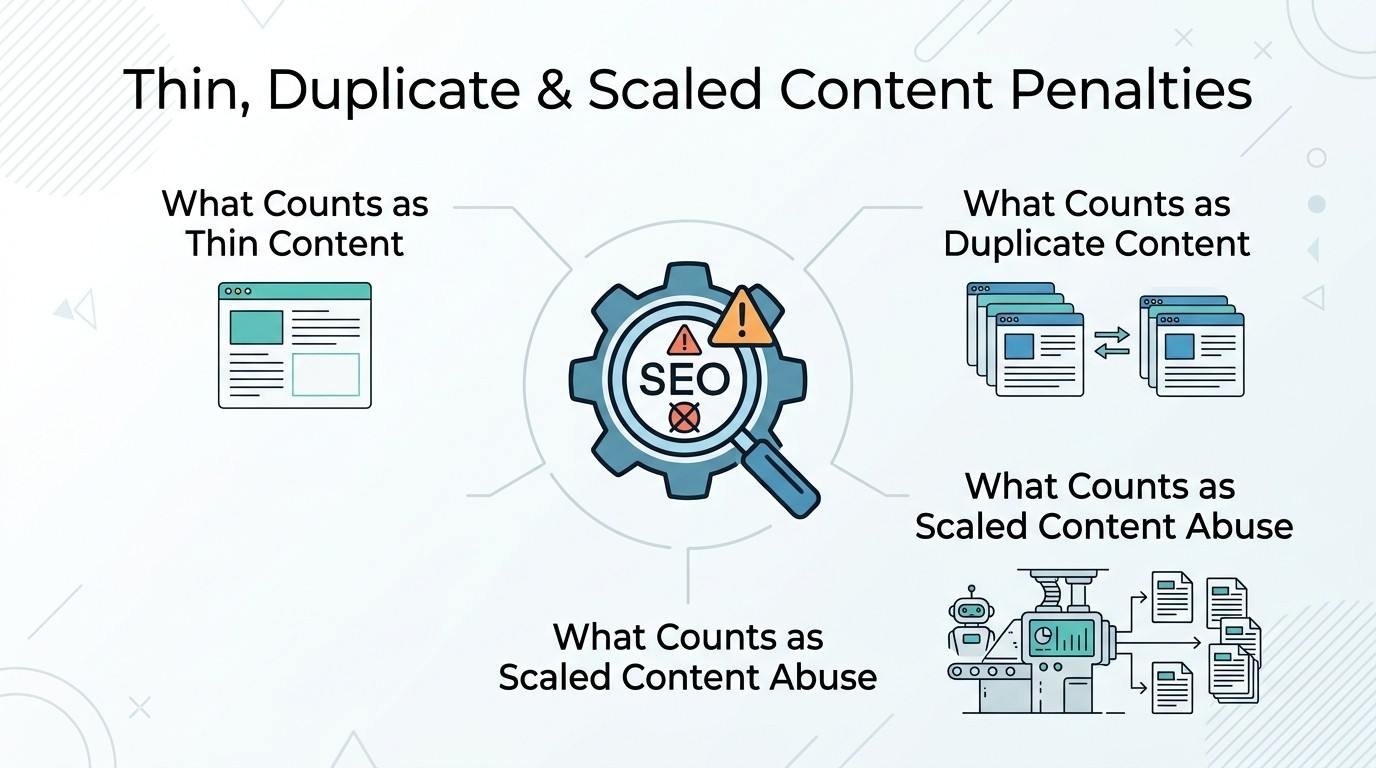
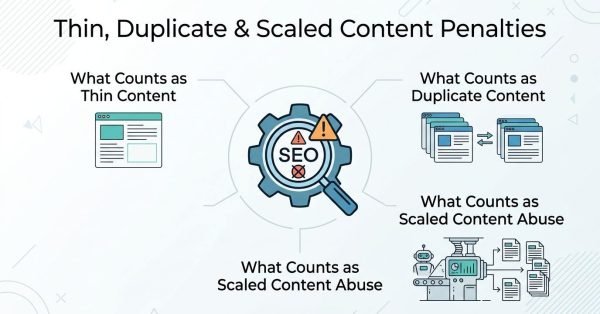
Infographic titled 'Thin, Duplicate & Scaled Content Penalties' illustrating what counts as thin content on the left, what counts as duplicate content on the top right, and what counts as scaled content abuse on the bottom, surrounding a central SEO gear and magnifying glass icon.

Thin, duplicate, and scaled content penalties happen when Google determines a significant portion of a site’s
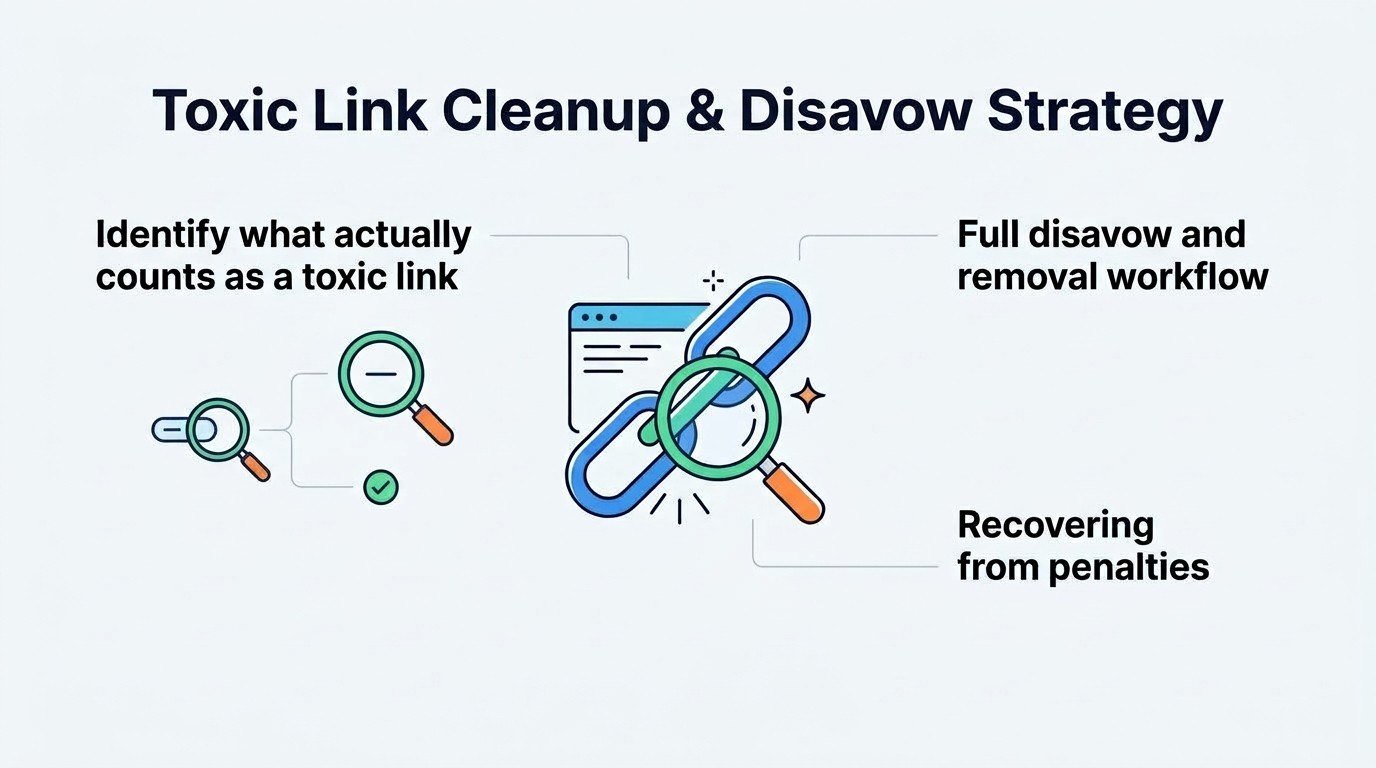
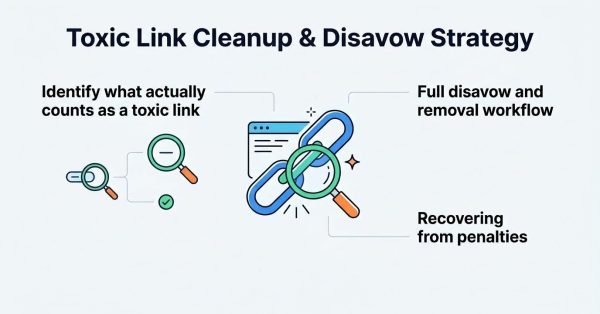
Infographic titled 'Toxic Link Cleanup & Disavow Strategy' illustrating how to identify what actually counts as a toxic link on the left, full disavow and removal workflows on the top right, and recovering from penalties on the bottom right, surrounding a central magnifying glass and link icon.

Toxic backlinks are links from low-quality, spammy, or manipulative sources that violate Google’s link scheme guidelines
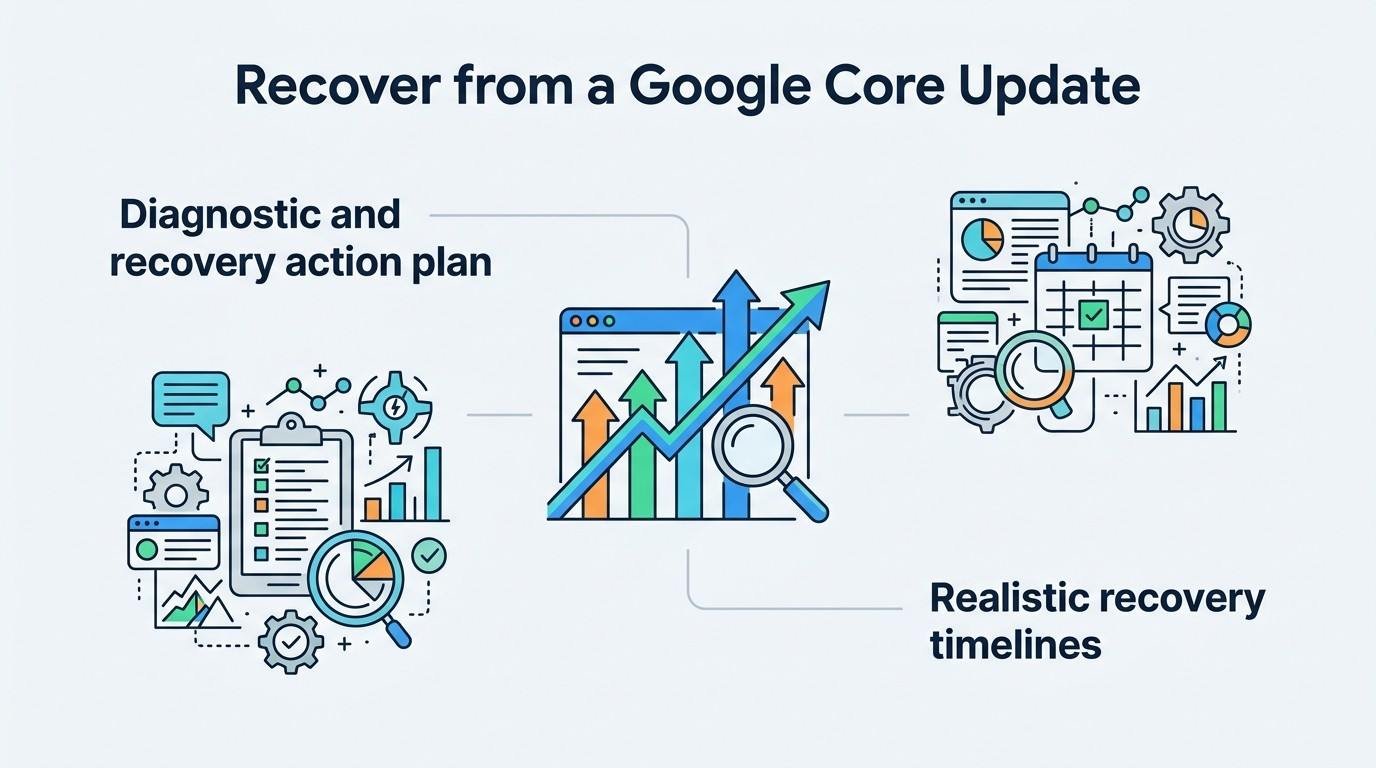
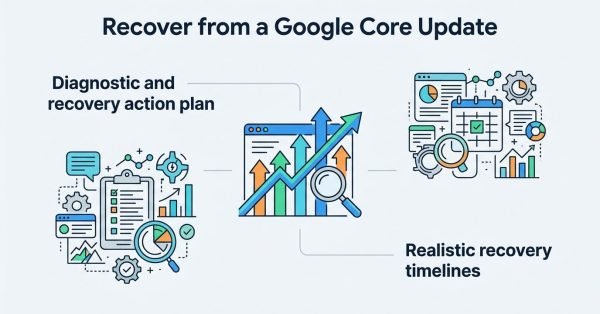
Infographic titled 'Recover from a Google Core Update' illustrating a diagnostic and recovery action plan on the left and realistic recovery timelines on the right, surrounding a central search window with rising trend arrows and a magnifying glass.

A Google core update is a broad, sitewide change to Google’s ranking algorithms designed to improve
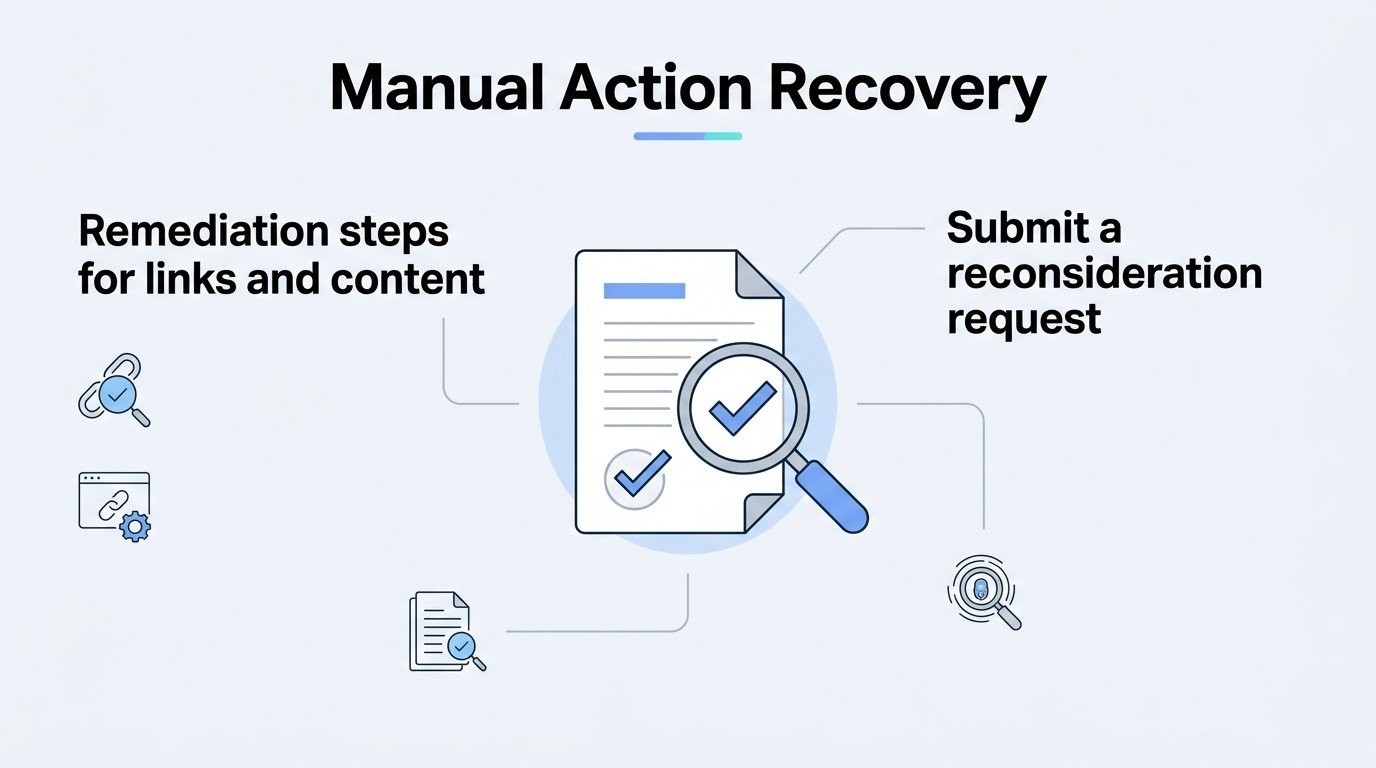
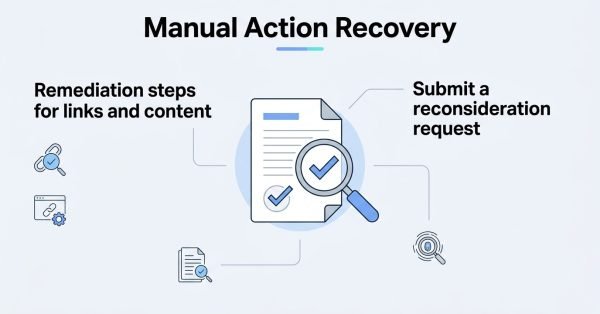
Infographic titled 'Manual Action Recovery' illustrating remediation steps for links and content on the left and submitting a reconsideration request on the right, surrounding a central document with a checkmark and magnifying glass icon.

A manual action is a penalty that a human reviewer at Google applies to a site
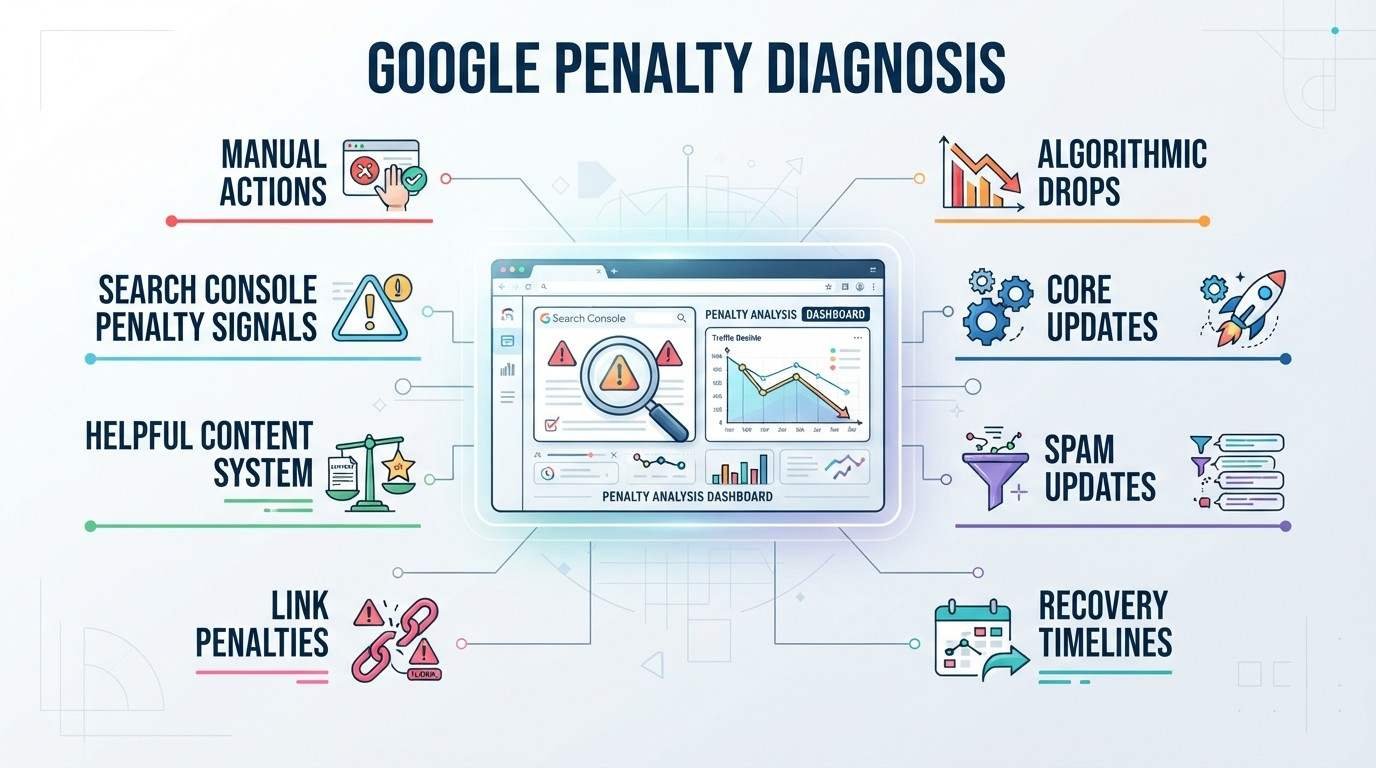
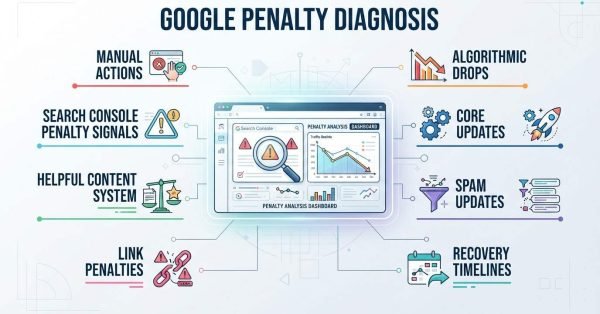
Infographic titled 'Google Penalty Diagnosis' illustrating manual actions, search console penalty signals, helpful content systems, and link penalties on the left, alongside algorithmic drops, core updates, spam updates, and recovery timelines on the right, surrounding a central penalty analysis dashboard and search console interface.

Google penalty diagnosis is the process of identifying whether a traffic or ranking drop stems from

Request Your Free SEO Audit

Tell us about your site and goals. We’ll respond within one business day.