White Label SEO Service

Tag: SEO

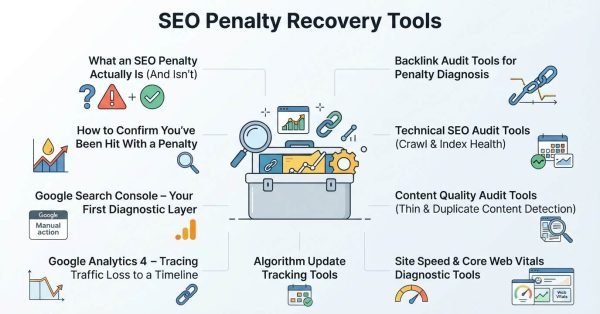
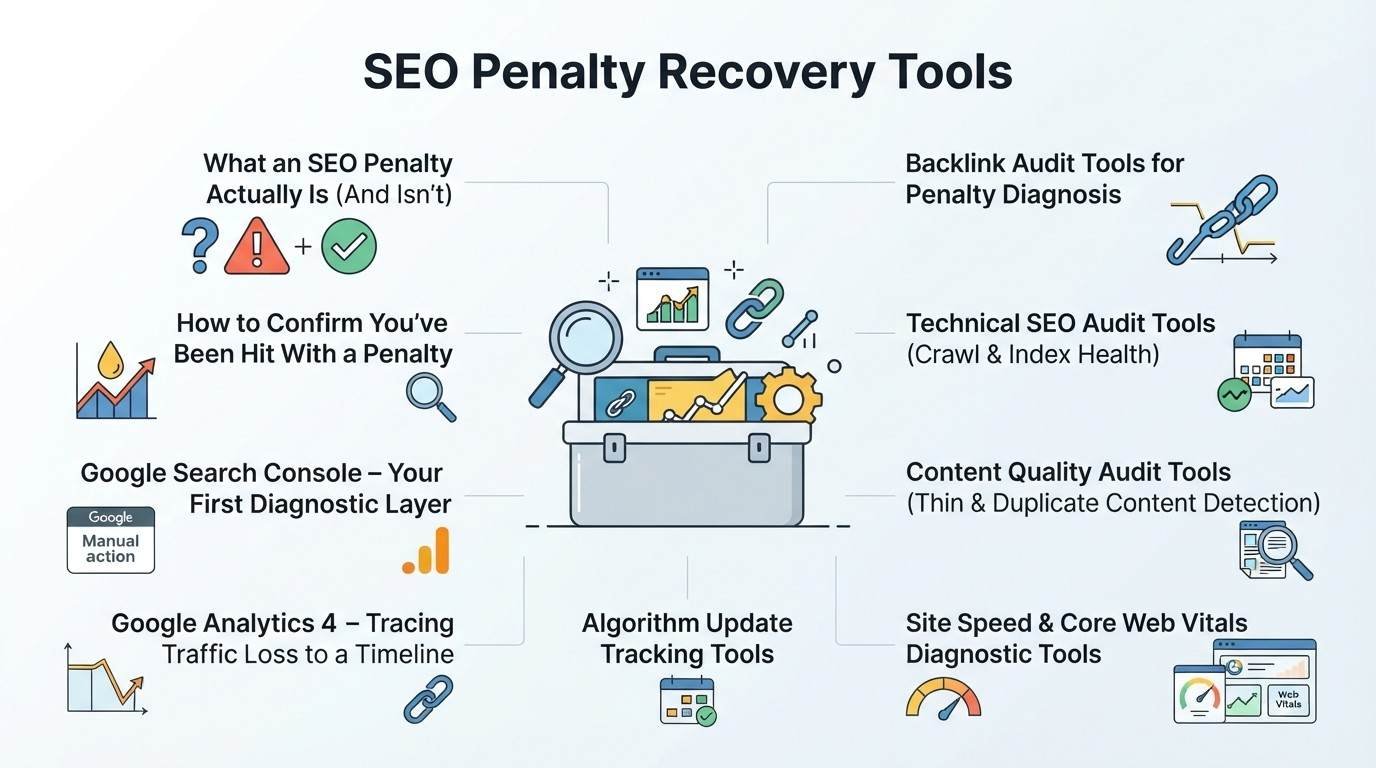
Infographic titled "SEO Penalty Recovery Tools" highlighting what an SEO penalty is and isn't, how to confirm a penalty, Google Search Console as a first diagnostic layer, Google Analytics 4 for tracing traffic loss, algorithm update tracking tools, site speed and Core Web Vitals diagnostics, content quality audit tools for thin and duplicate content, technical SEO audit tools for crawl and index health, and backlink audit tools for penalty diagnosis.

An SEO penalty is a drop in search visibility caused by a manual action from Google

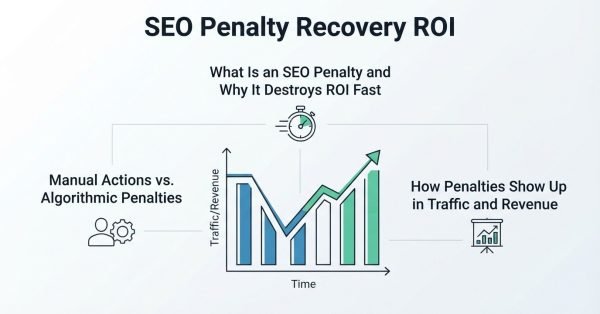
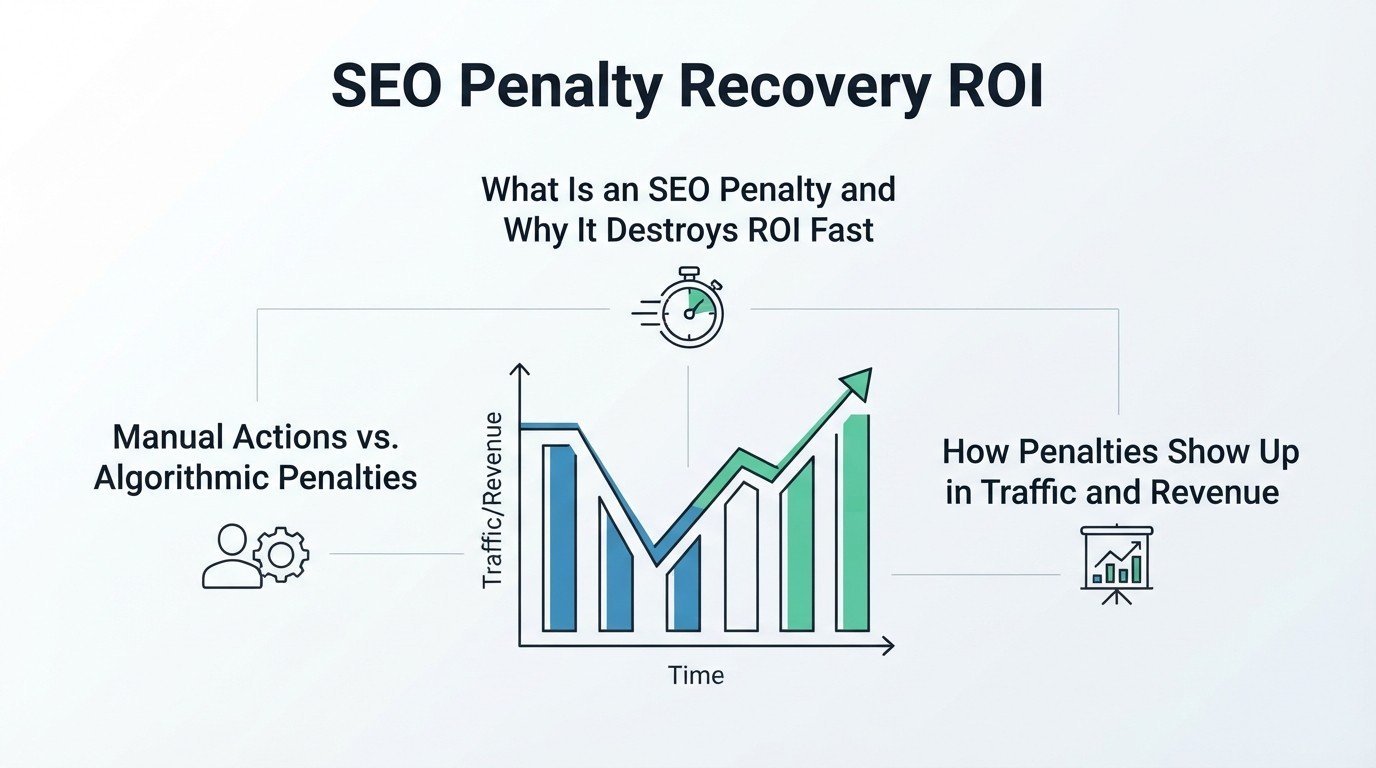
Infographic titled "SEO Penalty Recovery ROI" detailing what an SEO penalty is, why it destroys ROI fast, the differences between manual actions and algorithmic penalties, and how penalties show up in traffic and revenue over time.

SEO penalty recovery restores lost organic visibility after Google issues a manual action or an algorithmic
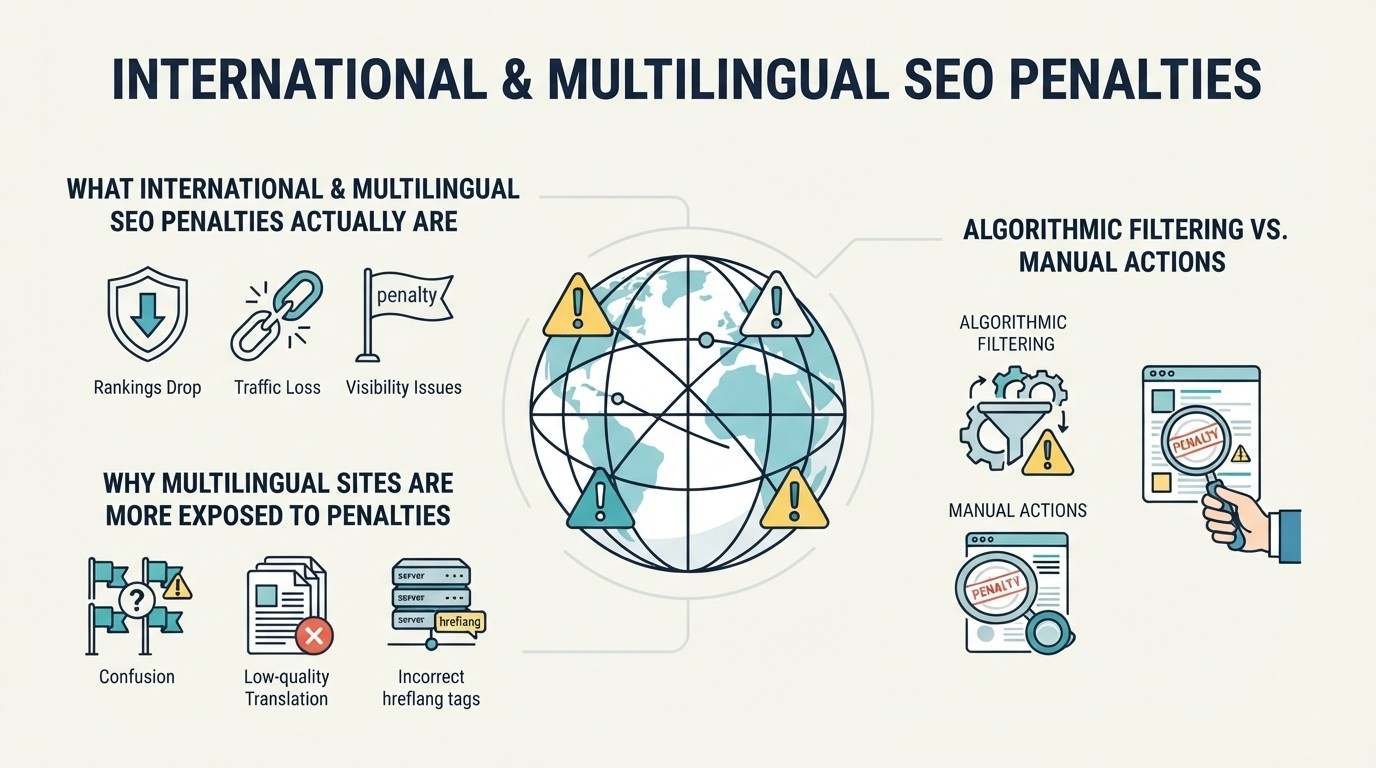
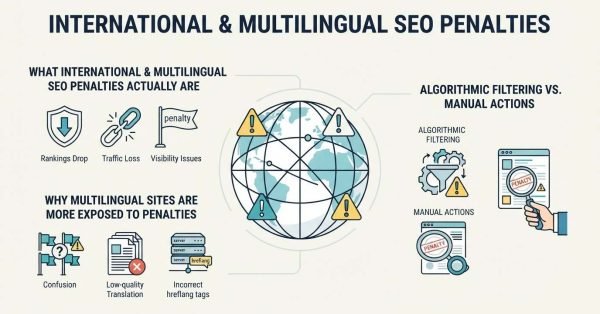
Infographic titled "International & Multilingual SEO Penalties" detailing what penalties are—including rankings drops, traffic loss, and visibility issues—why multilingual sites are exposed due to confusion, low-quality translation, and incorrect hreflang tags, and the difference between algorithmic filtering and manual actions.

I’ve watched multilingual sites lose 40-60% of organic traffic overnight, and hreflang errors are usually the
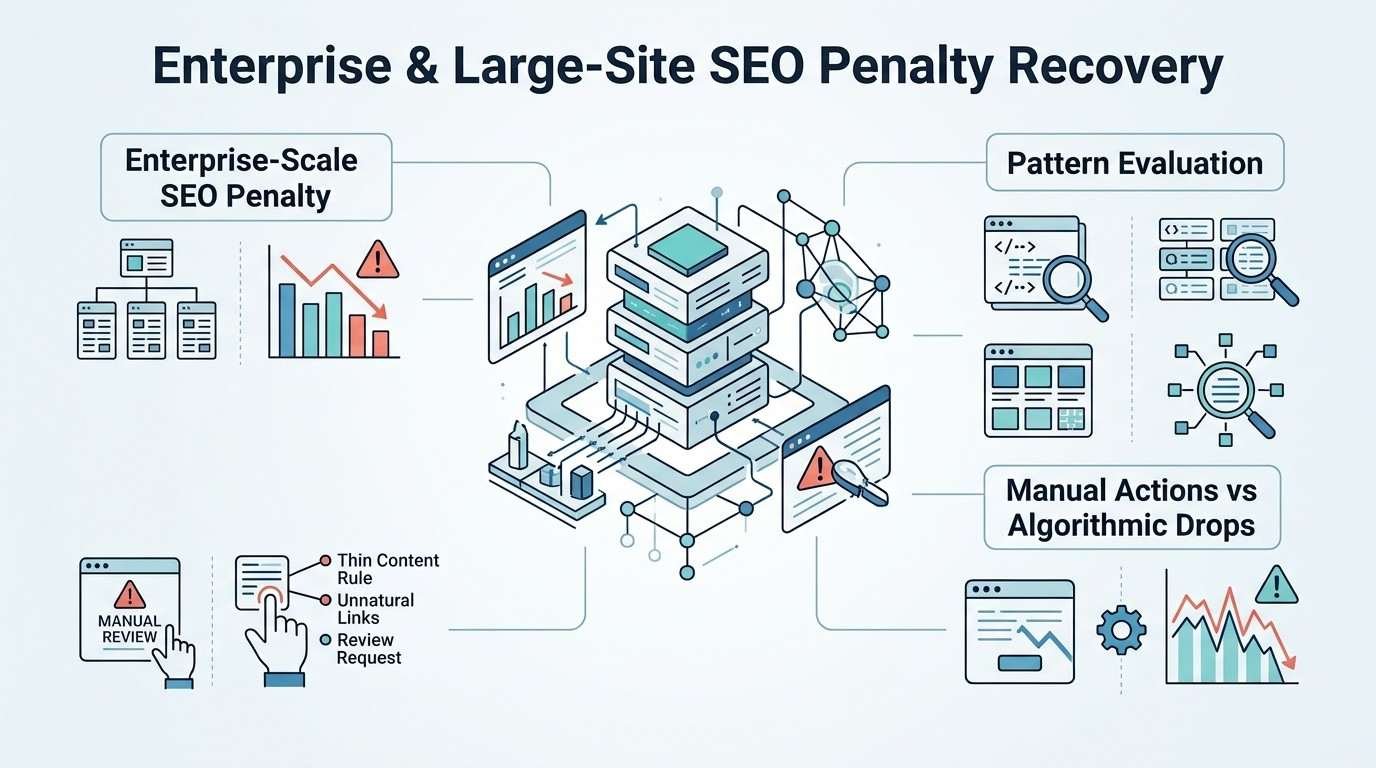
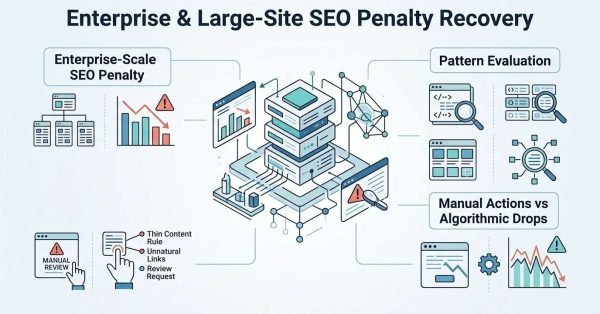
Infographic titled 'Enterprise & Large-Site SEO Penalty Recovery' illustrating enterprise-scale SEO penalties on the left-covering site hierarchies, traffic drops, manual reviews, thin content rules, unnatural links, and review requests-pattern evaluation on the top right, and manual actions versus algorithmic drops on the bottom right, surrounding a central server rack infrastructure graphic.

A single manual action or algorithmic update on an enterprise site can wipe out millions in
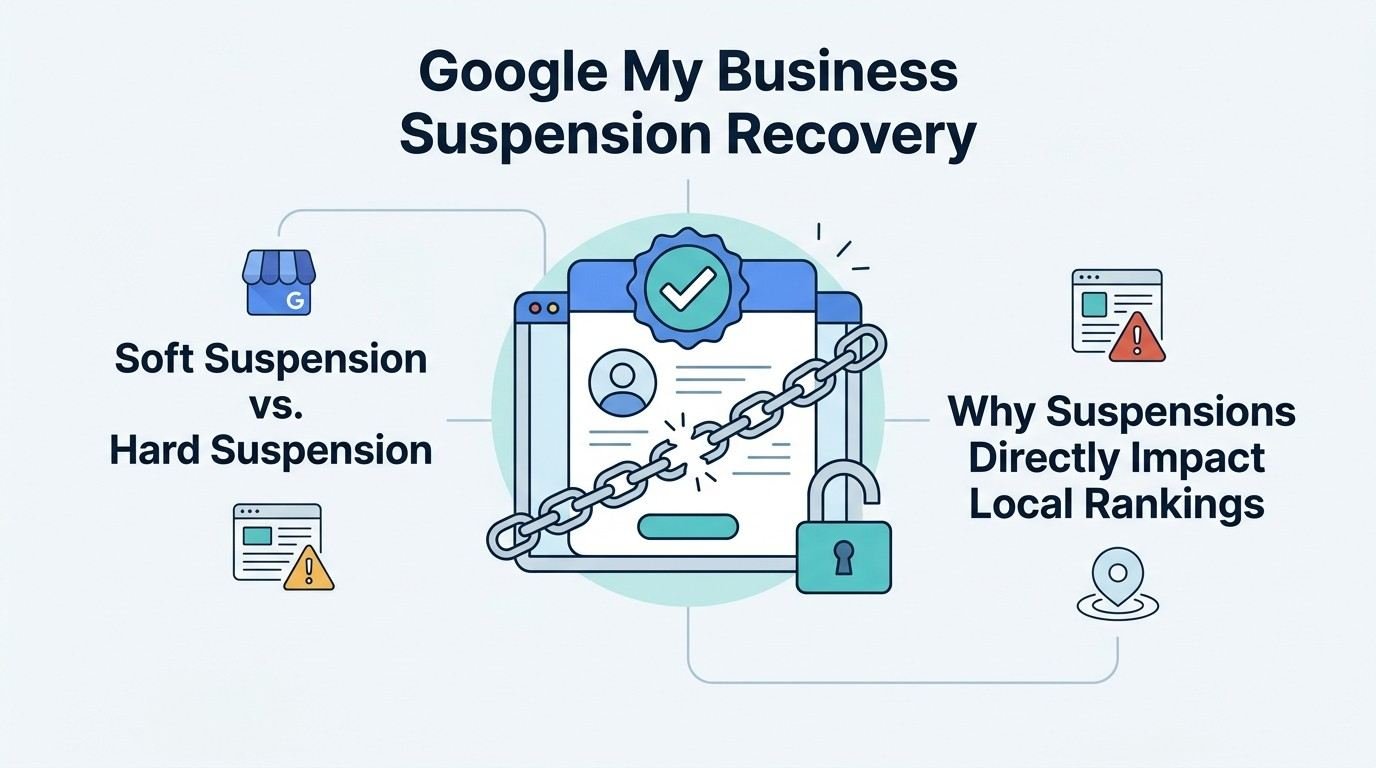
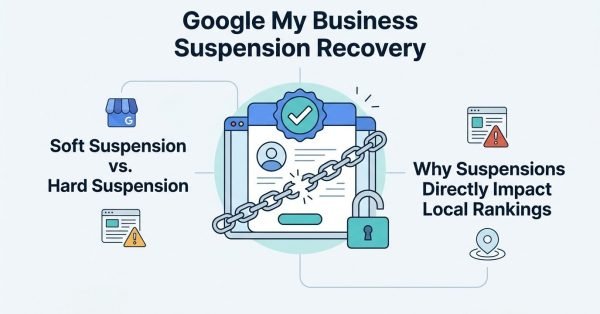
Infographic titled 'Google My Business Suspension Recovery' illustrating soft suspension versus hard suspension on the left, and why suspensions directly impact local rankings on the right, surrounding a central profile document locked with a chain and padlock.

Google suspends a business profile when it detects a violation of its guidelines, which removes the
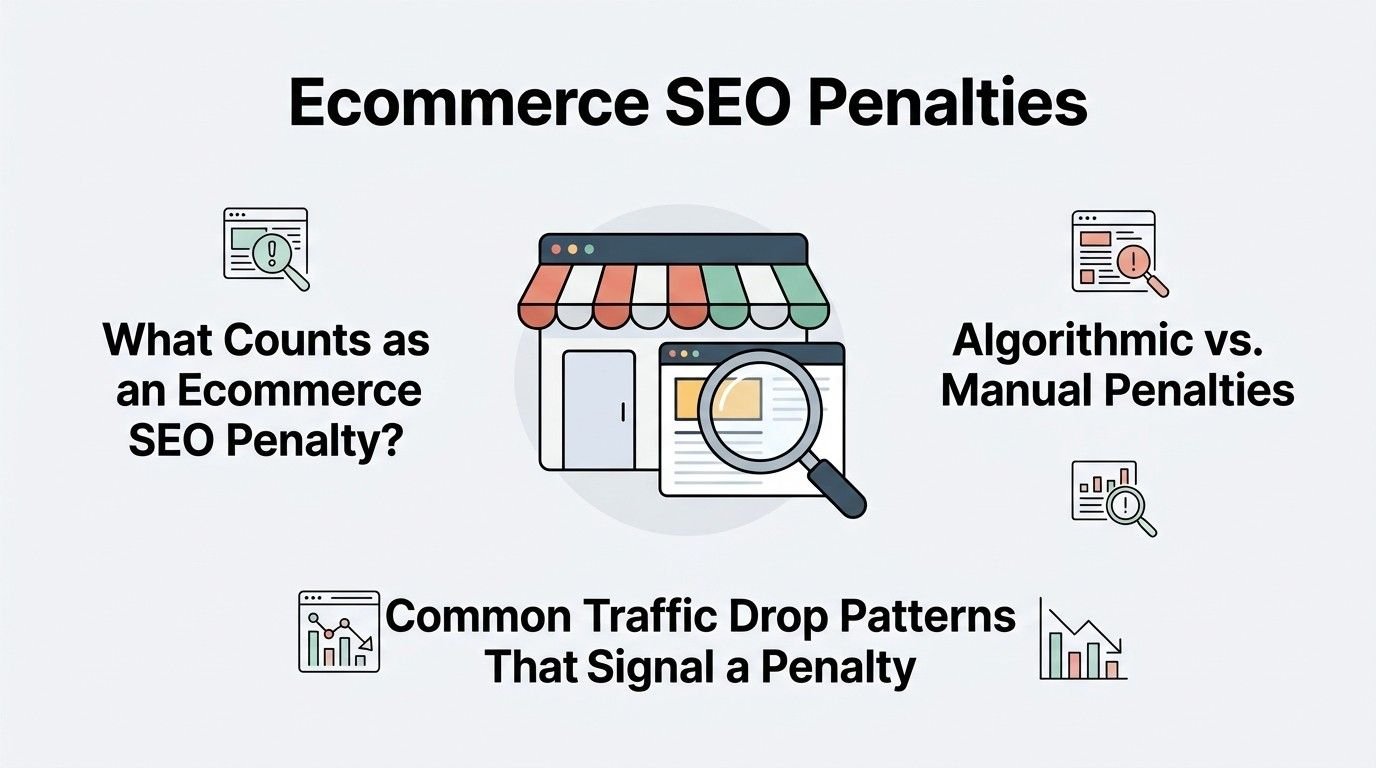
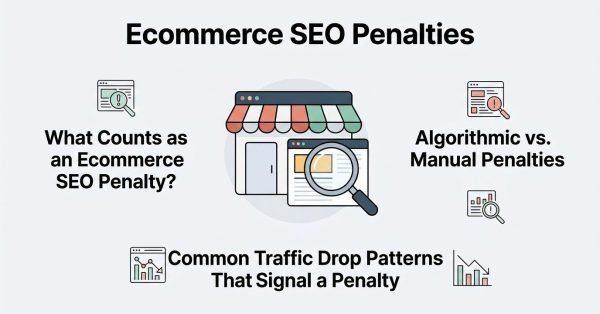
Infographic titled 'Ecommerce SEO Penalties' illustrating what counts as an ecommerce SEO penalty on the left, algorithmic versus manual penalties on the right, and common traffic drop patterns that signal a penalty at the bottom, surrounding a central storefront and magnifying glass icon.

An ecommerce SEO penalty is a ranking or visibility loss triggered either by a manual review
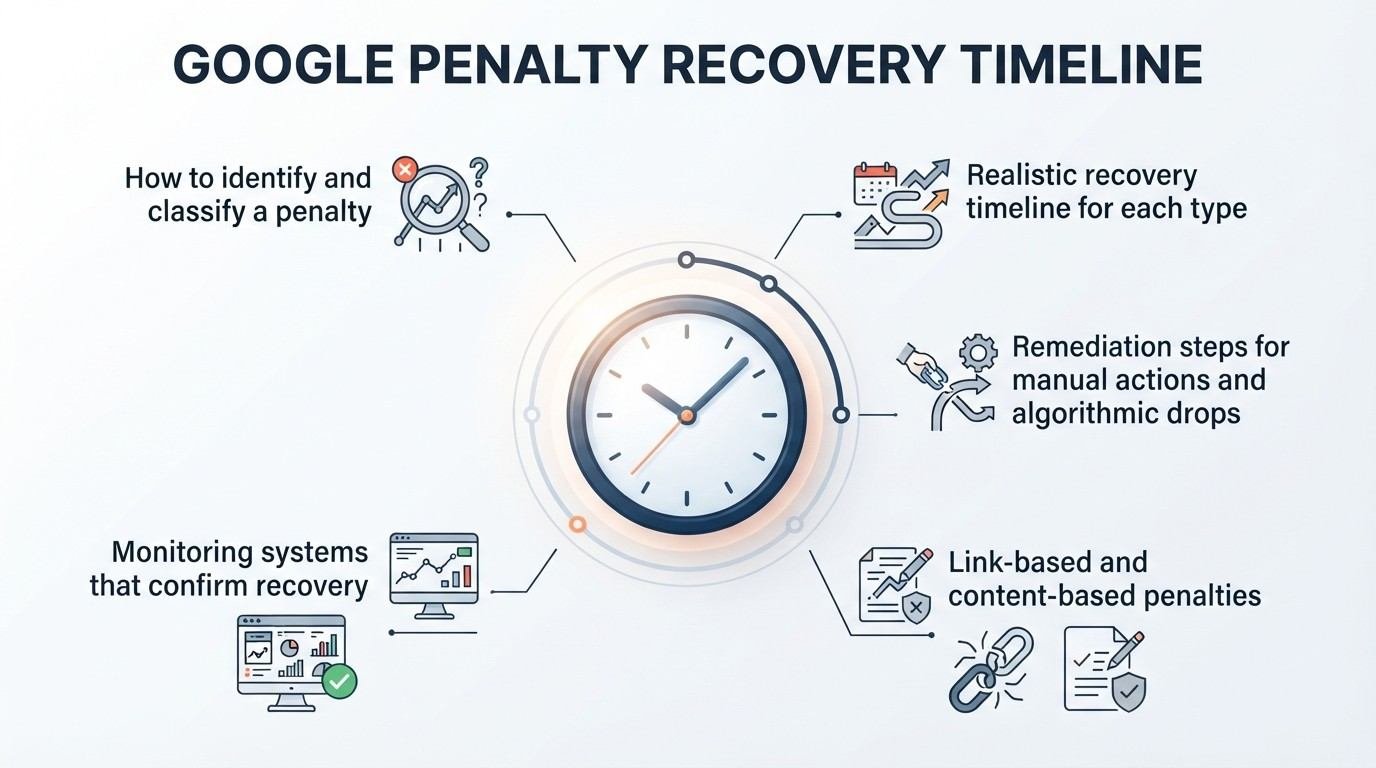
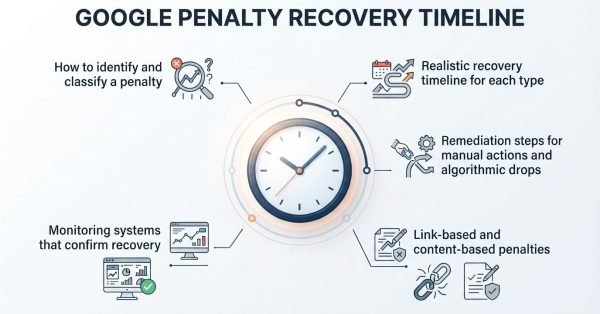
Infographic titled 'GOOGLE PENALTY RECOVERY TIMELINE' illustrating how to identify and classify a penalty on the top left, realistic recovery timelines for each type on the top right, remediation steps for manual actions and algorithmic drops on the middle right, link-based and content-based penalties on the bottom right, and monitoring systems that confirm recovery on the bottom left, surrounding a central clock icon.

Google penalty recovery typically takes anywhere from a few days to twelve months, depending on the
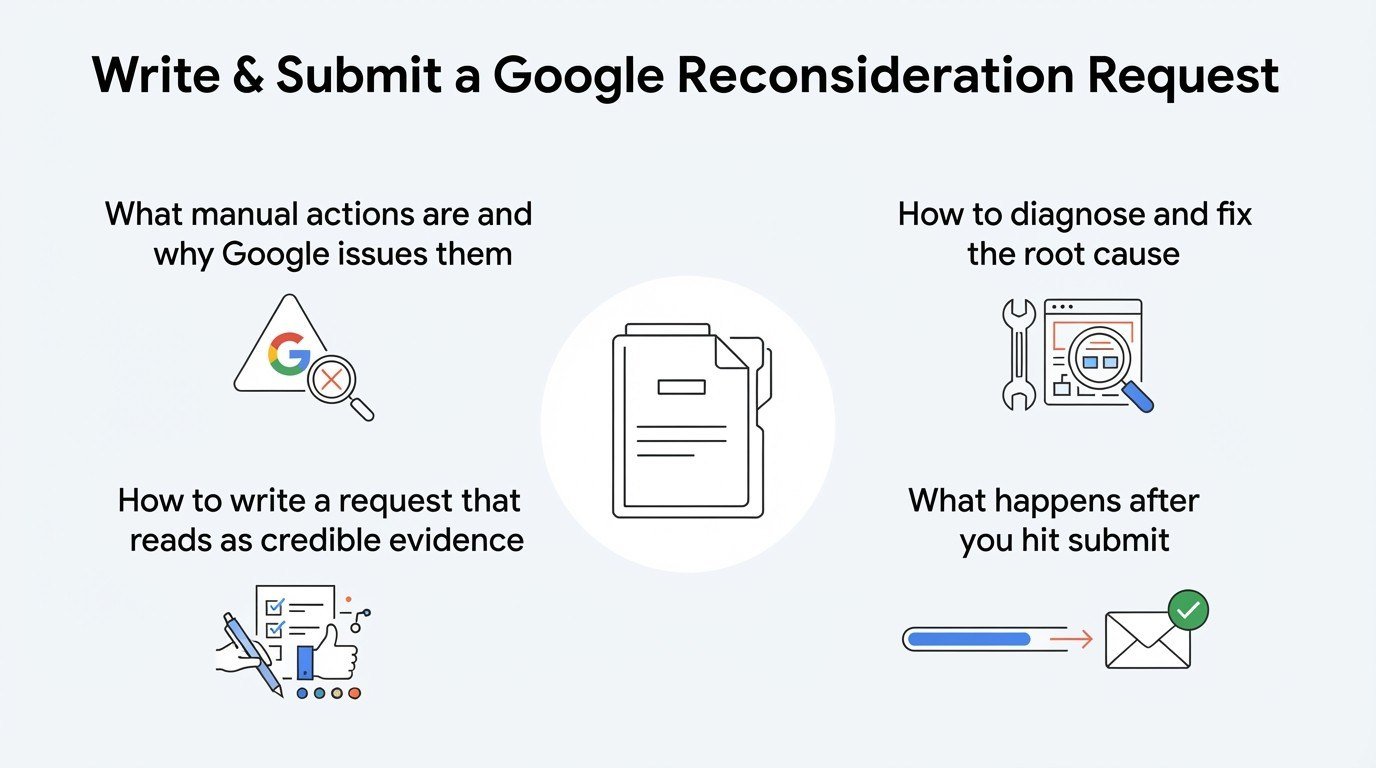
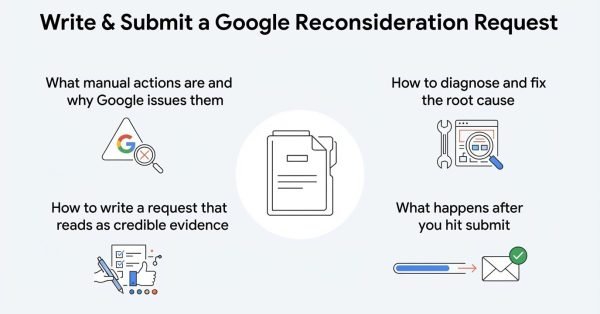
Infographic titled 'Write & Submit a Google Reconsideration Request' illustrating what manual actions are and why Google issues them on the top left, how to write a request that reads as credible evidence on the bottom left, how to diagnose and fix the root cause on the top right, and what happens after you hit submit on the bottom right, surrounding a central document file icon.

A Google reconsideration request is a formal appeal submitted through Search Console asking Google to lift
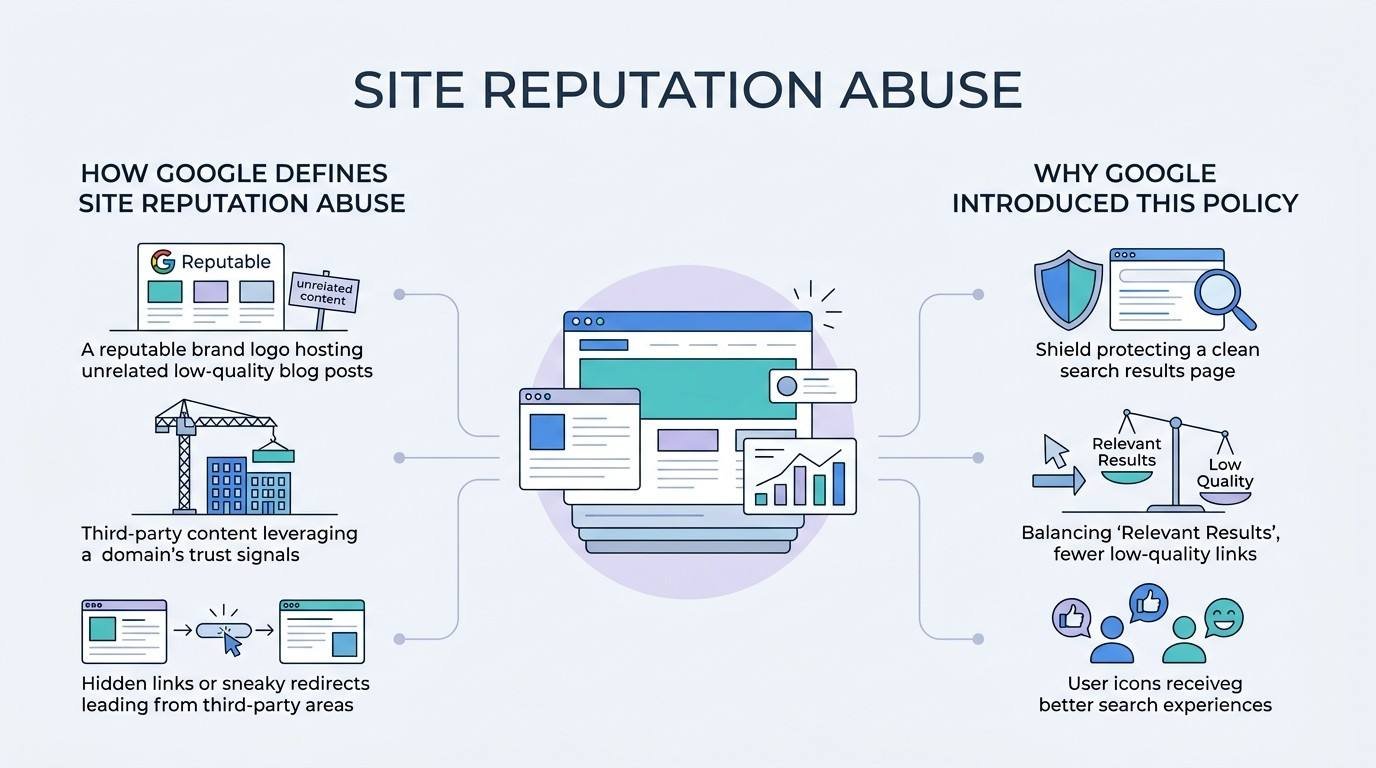
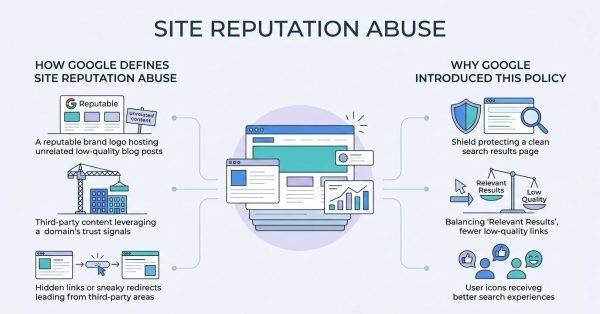
Infographic titled 'Site Reputation Abuse' illustrating how Google defines site reputation abuse on the left—covering reputable brands hosting unrelated low-quality blog posts, third-party content leveraging domain trust signals, and hidden links or sneaky redirects—and why Google introduced this policy on the right—covering clean search result shields, balancing relevant results against low quality, and providing better user experiences—surrounding a central browser and analytics icon.

Site reputation abuse happens when a website hosts low-quality, third-party content primarily to exploit its own
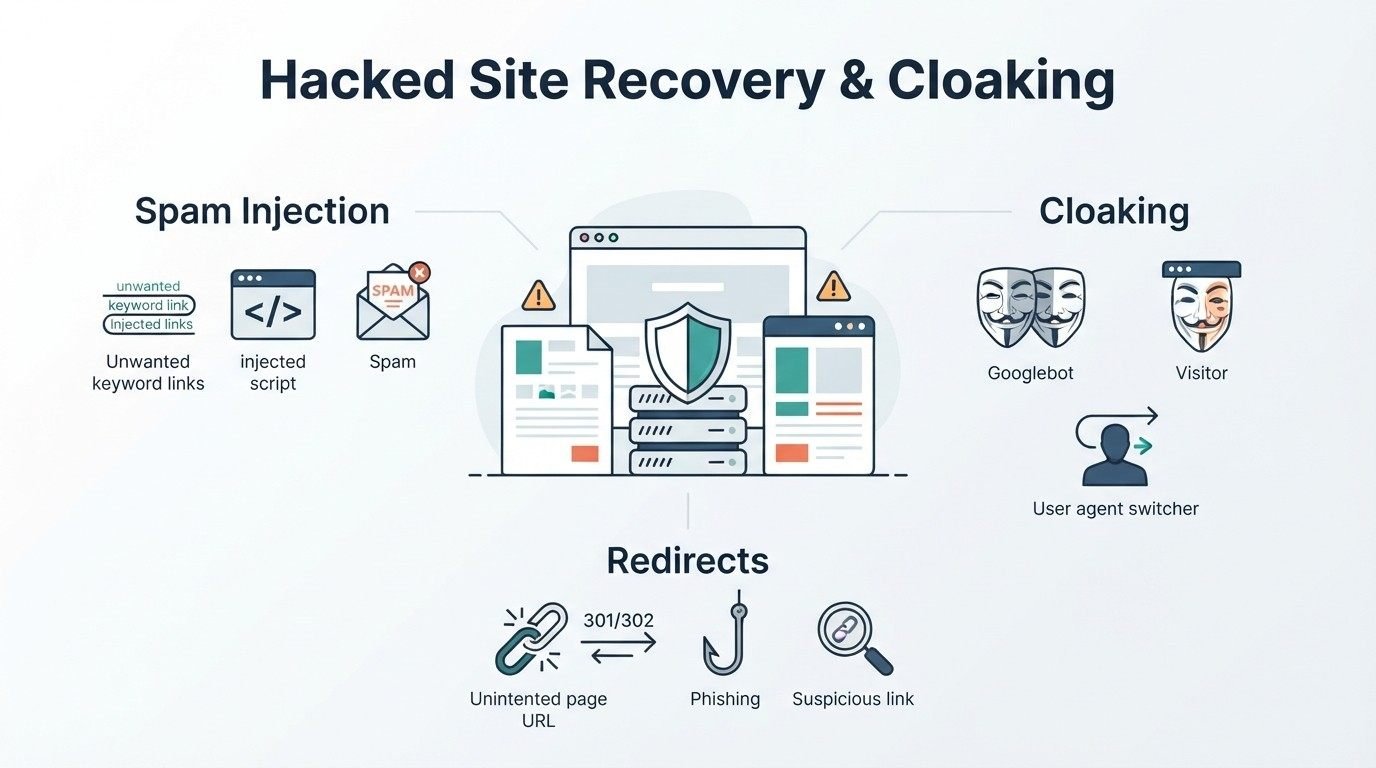
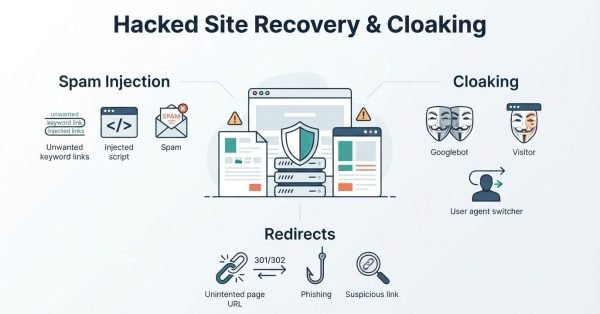
Infographic titled 'Hacked Site Recovery & Cloaking' illustrating spam injection on the left-covering unwanted keyword links, injected scripts, and spam messages-cloaking on the right-covering Googlebot versus visitor differences and user agent switchers—and redirects at the bottom-covering unintended page URLs, 301/302 redirects, phishing, and suspicious links—surrounding a central secure website shield icon.

A hacked website is a site compromised by unauthorized code, content, or redirects, and cloaking is

Request Your Free SEO Audit

Tell us about your site and goals. We’ll respond within one business day.